
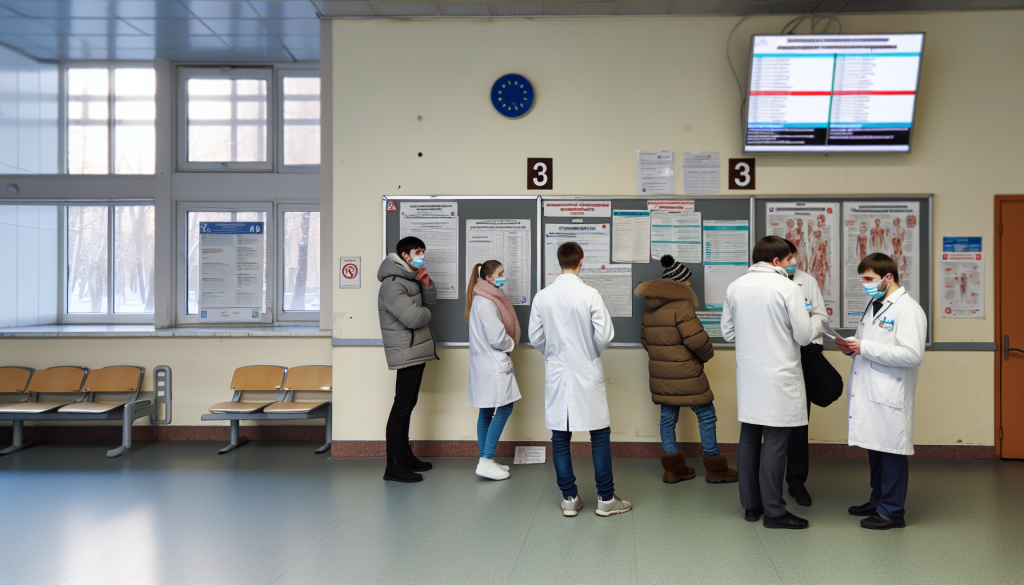
Sursa foto: AI generated image
The NHS is facing a challenging festive period as resident doctors continue a five-day strike and new public health figures show flu activity remains high, though there are signs it may be stabilising.
Flu levels remain elevated, but latest data suggests stabilisation
For the second consecutive week, NHS England has recorded what it describes as record flu levels for this time of year, prompting warnings that hospitals remain on “high alert” and that the service is “not out the woods yet”.
However, the latest figures have been presented alongside caution that week-on-week records need to be interpreted carefully. Flu has arrived earlier than usual this year, meaning current levels are being compared with earlier points in previous seasons’ waves.
New reporting from the UK Health Security Agency (UKHSA) indicates flu may be levelling off. The agency said that, according to most indicators, flu activity is stabilising and circulating at medium levels.
In its latest report, UKHSA said influenza positivity was broadly unchanged, with a weekly mean positivity rate of 20.7% compared with 21.0% the week before, while adding that positivity “started to decrease in the latest days of the week”. The overall weekly hospital admission rate for flu also remained stable at 10.32 per 100,000, compared with 10.19 per 100,000 in the previous week. Admissions to intensive care and high dependency units for flu were also reported as stable.
Alongside flu, UKHSA said COVID activity remained stable, with circulation at base levels. For RSV, it reported mixed trends and medium circulation levels.
UKHSA cautions flu could ‘bounce back’ in the New Year
Despite describing “encouraging signs”, UKHSA urged caution over Christmas, warning flu can be unpredictable.
Dr Alex Allen, consultant epidemiologist at UKHSA, said that even with positive signals, “flu is notoriously unpredictable and can bounce back and peak a second time in the New Year”.
He advised simple steps when mixing indoors during the festive period: minimise contact with others if you have flu or COVID symptoms; wash hands regularly with warm water and soap; ensure indoor spaces are well ventilated; and consider wearing a mask if you have symptoms and need to go out. Dr Allen also urged anyone still eligible for a vaccine who has not had one to come forward for vaccination.
Infection rates fall across England, but pressures remain uneven
Analysis of the latest UKHSA release found infection rates have fallen in every region in England, including the North of England, where infection rates remain the highest.
Regional hospital data showed a mixed picture for the number of flu patients in hospitals. The North West saw a week-on-week fall, down 4% compared with the previous week. In contrast, all other regions recorded increases.
The largest week-on-week rise was in the South West, where figures increased by 40% from 139 to 195. Eastern England also rose by 39% from 207 to 287. The South East increased by 33%; the North East and Yorkshire rose by 21%; London by 18%; and the Midlands by 13%.
Scotland records rise in flu deaths despite drop in cases
In Scotland, new figures showed a sharp rise in deaths registered where flu was the underlying cause. National Records of Scotland data recorded 67 deaths in the latest week, up from 30 the previous week.
The same dataset showed 76 death certificates mentioned flu in the latest week, up from 37 the week before. The figures came as Public Health Scotland data pointed to a sharp drop in the number of flu cases overall.
Resident doctors’ strike continues as dispute over pay and jobs deepens
The latest health data has been released against the backdrop of the second day of a resident doctors’ strike, which is due to run for three more days.
The industrial action is the 14th resident doctors’ strike since early 2023. The British Medical Association (BMA) has said the dispute centres on an erosion of salaries due to inflation and concerns about a lack of training posts.
A pay deal agreed with the new Labour government in September 2024 paused strike action for nearly a year, but walkouts resumed in July. At the time, the BMA said: “While this agreement marked the end of formal dispute process, resident doctors leaders were clear that it was merely a step forward rather than the end of the journey to full pay restoration.”
Calls for a ‘credible offer’ as government criticises walkouts
Dr Haseena Wazir, chair of the regional doctors’ committee in South Thames for the BMA, said the government should stop “briefing against doctors” and “scaremongering the public”, and called on Health Secretary Wes Streeting to produce a “genuinely credible offer”.
Dr Wazir said such an offer should address what she described as a jobs crisis, restore confidence in training, and keep doctors on a “clear path towards pay restoration”. She said resident doctors striking had conveyed “unity and resolve”, adding that their demands were “entirely reasonable” and linked to “years of real terms pay erosion, rising competition for training posts, and growing job insecurity”.
The government has been highly critical of the strike. Streeting accused the BMA of having a “shocking disregard for patient safety”. He also said: “The BMA’s regrettable decision to pursue strike action at this critical moment is piling on the pressure, but the NHS team has responded brilliantly to keep the show on the road. Our entire focus is on keeping patients safe through the strikes and this peak period for the NHS.”
Public invited to share impact of strike disruption
People affected by strike disruption have been invited to share their experiences via WhatsApp at Send us a message on WhatsApp or by emailing news@skynews.com. More information is available at contacting us here.