New funding package aims to protect communities and critical infrastructure
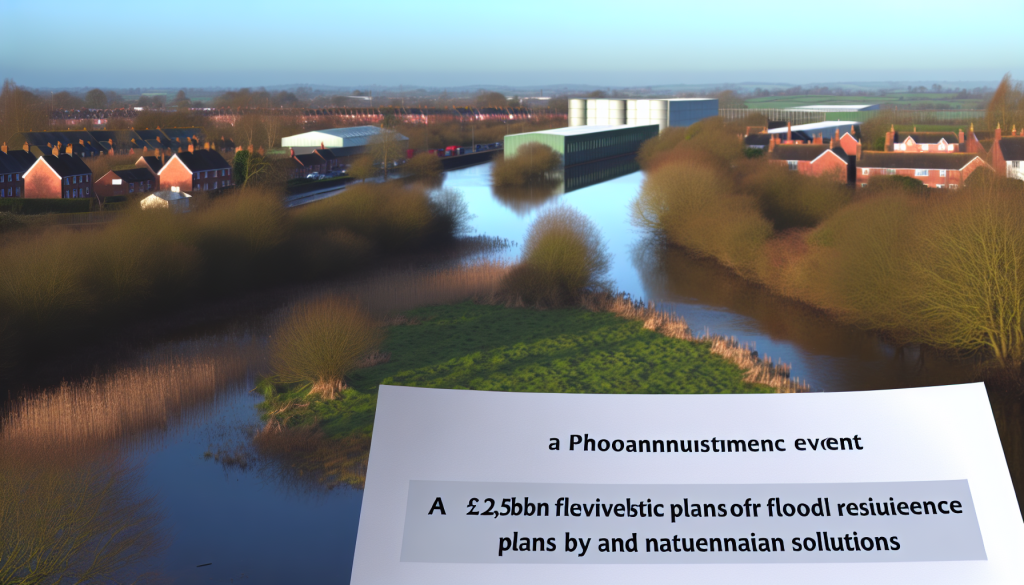
The UK Government has unveiled a £2.5 billion national flood resilience plan designed to strengthen defences, accelerate nature-based solutions and improve emergency response across regions most vulnerable to extreme weather.
Under the package, ministers said funding would be allocated to both hard engineering projects — such as flood walls and pumping stations — and to sustainable, long-term measures including wetland restoration and river re-naturalisation. Officials emphasised that the programme seeks to balance immediate protection with strategies that reduce future risk in the context of climate change.
Funding and implementation
Departmental sources indicated the money will be distributed to local authorities and regional flood and coastal committees through a competitive bidding process, with priority given to areas where modelling shows the highest projected increase in flood frequency and severity. Projects are expected to be rolled out over a five-year period, with independent oversight to monitor progress and cost-effectiveness.
The plan also includes a commitment to modernise forecasting systems and to expand the national network of real-time river and coastal sensors. Officials said these upgrades will enhance early-warning capabilities and improve co-ordination between emergency services, councils and utility providers during flood events.
Local and expert reactions
Local leaders welcomed the announcement but urged clarity on distribution criteria and faster delivery timelines. “This funding is a necessary step, but communities need swift, tangible action,” one council leader commented. Representative groups for the water industry called for enhanced collaboration to ensure that drainage and sewage systems are integrated into resilience planning.
Climate scientists and environmental organisations broadly supported the inclusion of nature-based solutions, while stressing the importance of long-term maintenance and community involvement. An academic specialising in hydrology noted that investment in catchment-scale approaches can deliver co-benefits for biodiversity and water quality as well as flood reduction.
Economic and social implications
Analysts said improved flood resilience could reduce economic losses from future extreme events, protect housing and commerce in at-risk areas, and deliver jobs through construction and environmental restoration projects. However, they cautioned that effective implementation will require coordination across government departments, sustained funding beyond the initial package and robust planning to avoid maladaptive measures that transfer risk elsewhere.
Ministers indicated that the government will publish detailed guidance within weeks, outlining funding streams, technical standards and community engagement expectations. A parliamentary committee has signalled plans to scrutinise the programme’s rollout to ensure accountability and value for money.
As extreme weather events become more frequent, the announcement represents a policy pivot towards greater investment in resilience. Officials said they view the plan as the first phase of a long-term strategy to protect lives, assets and the natural environment from the mounting threat of flooding.
Photo source: AI-generated or edited image