
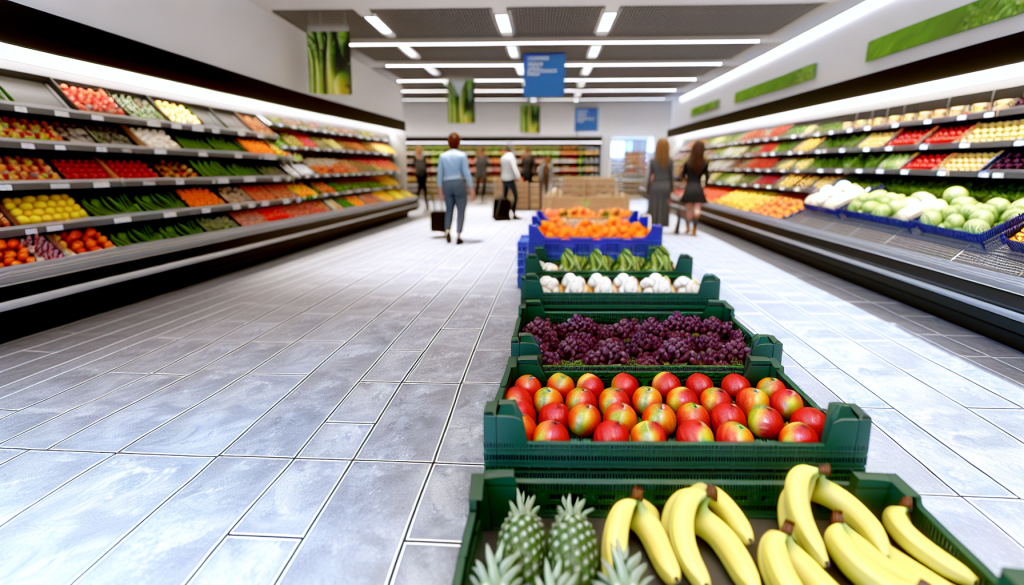
Placing fruit and vegetables near supermarket entrances can increase sales and improve diet quality, according to new research published by the University Hospital Southampton health research team.
The study found that changing store layouts led to thousands more fruit and vegetable purchases at each store every month, offering a practical policy option at a time when poor diet remains a major cause of ill health in the UK.
Study links store layout to healthier shopping habits
The WRAPPED study was carried out between March 2018 and May 2022 across 36 stores of a discount supermarket chain in England. Half of the stores introduced a new layout with fruit and vegetables positioned near the entrance, while the other half kept their existing layout for comparison.
Researchers said the change coincided with the COVID-19 pandemic and the cost of living crisis, during which fruit and vegetable purchasing and intake declined nationally. The study noted that household purchasing of fruit fell by 7.2% and vegetables by 5.3%, and that families were buying fewer than four portions a day on average.
Despite that wider backdrop, the stores with the new layout sold the equivalent of around 2,525 extra portions of fruit and vegetables per store each week compared with predicted sales without the change.
Researchers call for wider policy action
The team said the findings support stronger rules for food retail environments. They recommended making it a requirement for fruit and vegetables to be positioned near entrances in all large food stores, while also limiting unhealthy foods at checkouts, aisle ends and entrances.
Professor Christina Vogel, the study’s lead author, said the research shows how placing fruit and vegetables at supermarket entrances increased fresh produce sales. The researchers argued that the food industry and the public are caught in a cycle in which unhealthy foods are cheap to make, profitable to market, appealing to eat and affordable to buy.
Professor Adam Briggs, Director of NIHR’s Public Health Research Programme, said poor diet remains a leading cause of ill health and inequalities in the UK, adding that small changes in supermarket layouts can influence shopping habits and encourage healthier diets that may help prevent obesity and diet-related disease. More details were published alongside the research in the University Hospital Southampton research news release.
The findings add to a growing body of evidence suggesting that the retail environment can shape what people buy, not just what they intend to buy. For public health officials, the study points to a simple intervention that could support healthier eating without asking shoppers to make all the changes themselves.
Sursa foto: Imagine generată AI
