
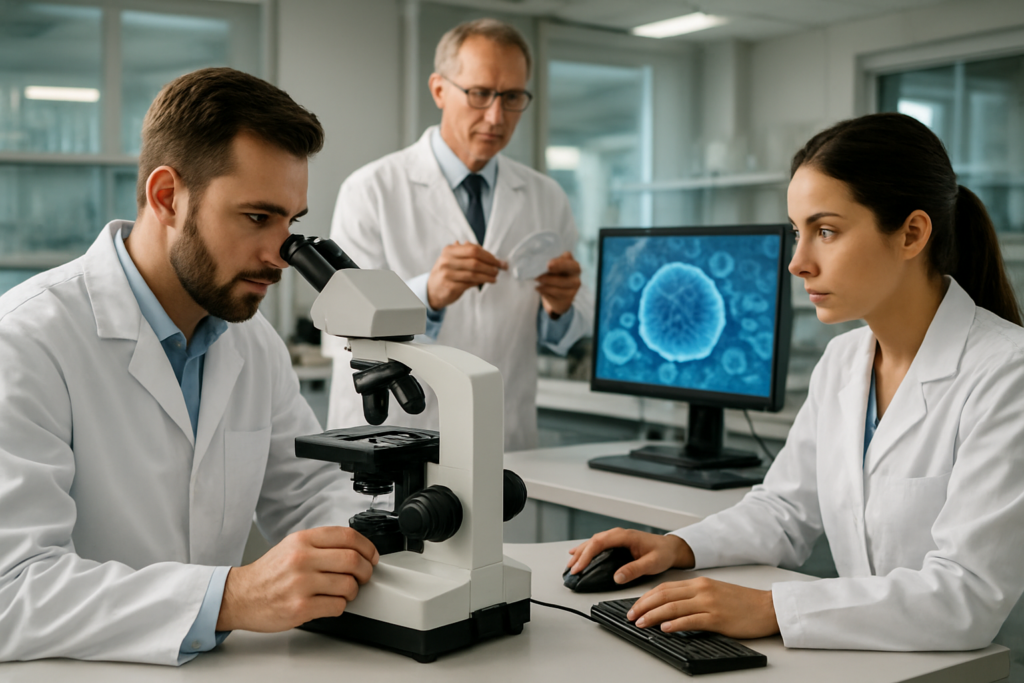
Researchers in the UK and Belgium have identified an unexpected level of organisation inside human sperm cells, a finding that could help scientists better understand male fertility. Using advanced imaging, the team discovered small DNA-free cavities in the sperm nucleus that appear to act as specialised hubs for proteasomes, the protein-recycling machines that keep cells functional.
What the researchers found inside the sperm nucleus
The study, reported on 2 September 2026, involved scientists at VIB, VUB and the Medical Research Council Laboratory of Molecular Biology in the UK. According to the report, the researchers used cryo-electron tomography to examine sperm cells in their native state and found that the sperm nucleus contains small cavities that had been observed before but not fully understood. These structures were packed with proteasomes organised into distinct clusters.
The team also identified a previously unknown variant of a sperm-specific proteasome component. The findings were published in Nature Structural & Molecular Biology and suggest that sperm cells may be far more structurally specialised than previously thought. Source
Why the discovery matters for fertility science
To understand when these compartments emerge, the scientists examined human testicular tissue and found that the proteasome-rich structures appear during the final stages of sperm development. That timing points to a possible role in the reshaping and compaction of genetic material as sperm mature.
The researchers say this could matter because defects in sperm development can affect fertility. The study also raises the possibility that these proteasomes remain active after fertilisation and may help remodel the paternal genome in the earliest stages of embryonic development. The team described the work as a foundation for future research into male reproductive health. Source
A new framework for future reproductive research
By combining high-resolution imaging with human tissue analysis, the researchers produced what they described as the first detailed map of how proteasomes are organised inside the human sperm nucleus. The work adds a new layer to the biology of sperm formation and could help shape future studies into infertility and early embryonic development.
While the findings are still early, the discovery gives researchers a fresh structural target to investigate in the search for answers to male fertility problems. It also underlines how much remains unknown about one of the body’s most highly specialised cell types.
Photo source: AI-generated or edited image