
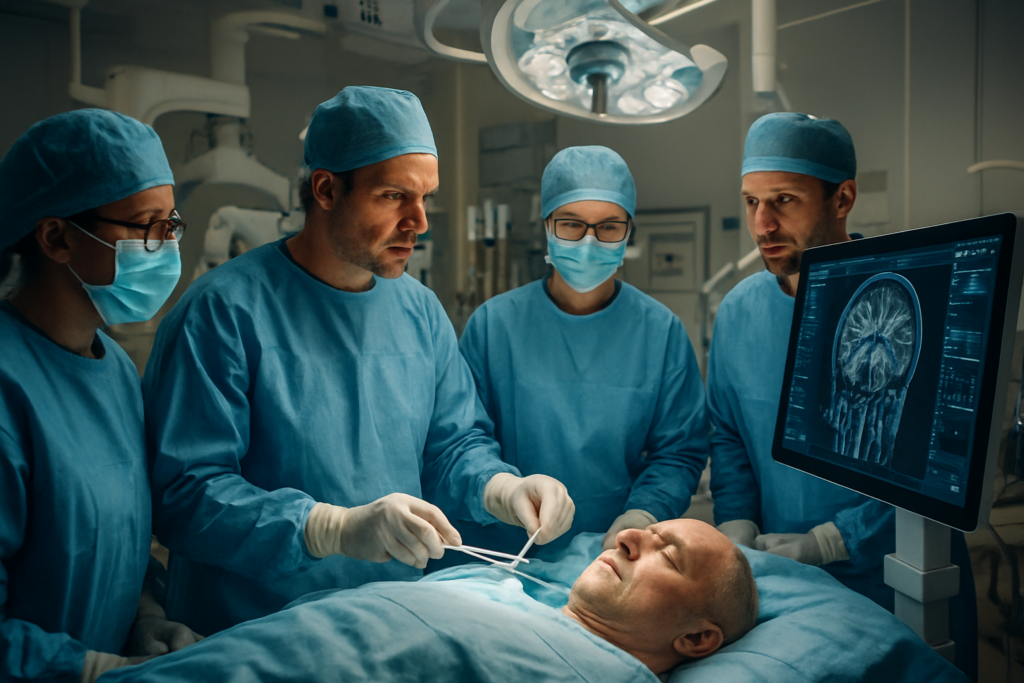
A patient in the UK has regained sight following what The BMJ described as the first successful AI-assisted brain tumour surgery, a case that has drawn attention to the growing role of artificial intelligence in complex neurosurgery. The report, published on 28 August 2026, presents the operation as a significant milestone for both surgical planning and patient outcomes.
Artificial intelligence moves into the operating theatre
The BMJ’s account places the procedure among a run of recent medical stories showing how AI is increasingly being tested in clinical settings. The surgery was notable not only because it was AI-assisted, but because it was linked to the restoration of sight in a UK patient, making the case particularly striking in a field where precision is critical.
The development comes as Nature also highlighted wider momentum around medical technology and life sciences, including a recent News & Views item on privacy risks from medical AI tools. That broader context underscores the fact that enthusiasm for AI in healthcare is being matched by continuing scrutiny over how such systems are used and governed.
Why the case matters for UK medicine
For UK clinicians and researchers, the report will likely be read as another sign that AI is moving from experimentation into practical use in high-stakes specialties. In neurosurgery, where millimetres can matter, the ability to support decision-making with advanced digital tools could have major implications for treatment planning and patient safety. The BMJ’s coverage does not present the case as a finished solution, but as a notable example of what is now possible.
The timing is also significant because the story appears alongside other BMJ reports on developments in UK health services and medical practice, including concerns about staffing, training and the pressures on NHS care. Against that backdrop, a successful AI-assisted surgery offers a reminder that innovation in life sciences is continuing even as the health system faces persistent strain.
What comes next
Although the report highlights a major breakthrough, it also leaves open the key questions that typically follow early successes in medical innovation: how widely the approach can be replicated, which patients may benefit, and how quickly the technique can move from a landmark case to routine practice. For now, the surgery stands as a notable moment for UK medicine and a clear example of how AI is beginning to reshape the life sciences landscape.
Photo source: AI-generated or edited image