
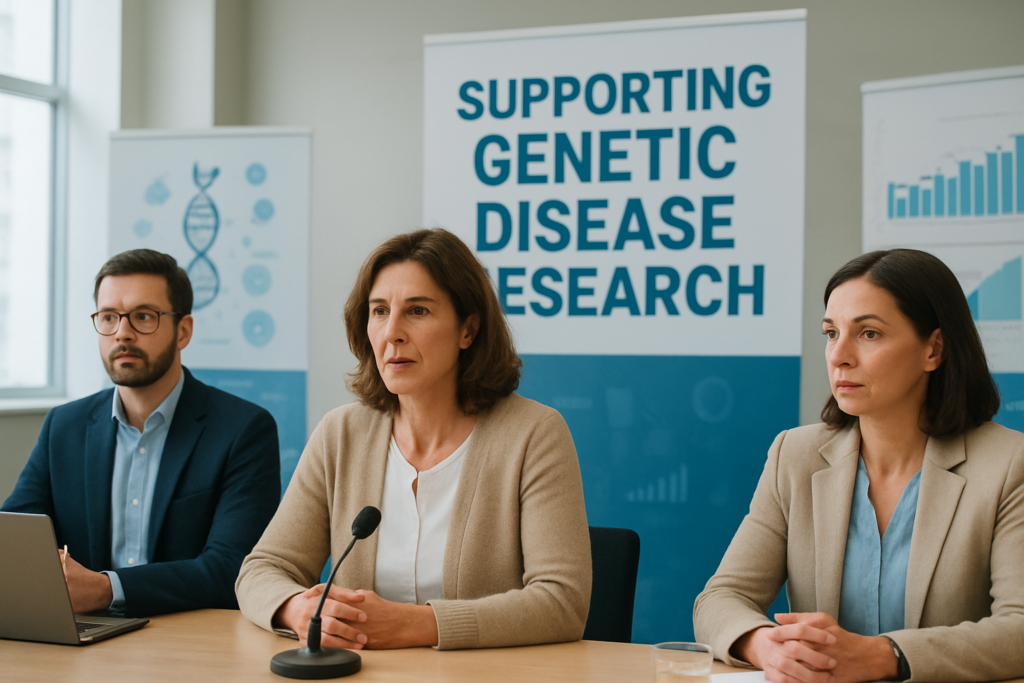
The Medical Research Council has announced fresh support for research into fatal genetic diseases, marking the latest in a series of UK life sciences announcements aimed at accelerating discoveries with clinical impact. The update was published on the MRC news page on 5 August 2026 and sits alongside other recent MRC-backed items including work on a bespoke lung cancer therapy vaccine and a new institute focused on obesity.
The funding announcement reflects the MRC’s continuing focus on medicine and biomedicine, with the council describing its remit as research aimed at improving human health. In its latest news listing, the MRC also highlights recent work spanning cancer, obesity, pregnancy-related conditions and high blood pressure, underscoring the breadth of current UK biomedical activity.
Recent MRC announcements show a broad research pipeline
Among the most recent items on the MRC news page is the 30 July 2026 report on the first UK patient being given a bespoke lung cancer therapy vaccine. That same day, the council also announced a new £72 million institute intended to help tackle obesity. Earlier in the summer, the MRC highlighted a world-first study on a twin pregnancy condition, as well as an AI tool that reveals hidden organ damage caused by high blood pressure.
These updates point to a research pipeline that is not limited to a single disease area. Instead, the council’s recent coverage ranges from fundamental biology to translational work that could shape future treatment decisions and NHS practice. For readers following UK health research, the pattern suggests continued investment in conditions that carry a heavy burden for patients and services alike.
Why the latest announcement matters for UK life sciences
The new funding for fatal genetic diseases is especially notable because genetic conditions often require long-term, highly specialized research before they can translate into treatment options. While the MRC news item does not add further detail on the scope of the award in the listing view, its placement at the top of the council’s latest announcements indicates it is currently the newest headline item in the portfolio.
UK researchers and clinicians have increasingly been working across genomics, diagnostics and advanced therapies, and the MRC’s recent announcements suggest that this direction remains central to national research priorities. In practical terms, that matters not only for laboratory science, but also for the development of diagnostics, clinical trials and future care pathways.
What comes next
The MRC’s latest news page shows that the council continues to support a wide range of health research projects, with new announcements appearing regularly. For the UK life sciences sector, that creates a steady flow of studies and investments that can feed into the wider research ecosystem, including universities, hospitals and translational research centres.
As the newest funding announcement moves through the research system, attention will likely turn to the specific diseases, teams and technologies involved. For now, it stands as another sign that UK biomedical research remains active across both rare disease and population health priorities. Read more on the MRC news page at UKRI MRC News and the broader UKRI news and events hub.
Photo source: AI-generated or edited image