
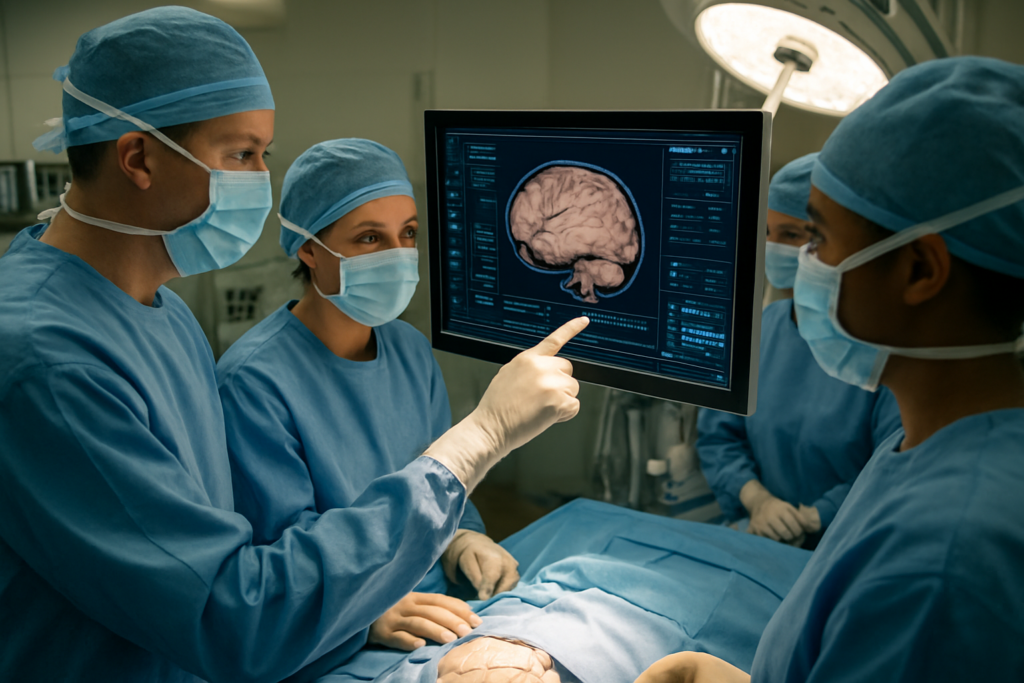
Doctors in the UK have reported what The BMJ describes as the first successful AI-assisted brain tumour surgery to save a patient’s sight, marking a notable step in the use of artificial intelligence in operating theatres. The development adds to a growing body of medical innovation at a time when clinicians are debating how quickly new technologies should be adopted across the NHS.
AI moves from theory into the operating room
The case highlights a shift from experimental promise to real-world clinical use. Rather than replacing the surgeon, the technology appears to have supported decision-making during a complex procedure, with the reported outcome being preservation of vision for the patient involved. That result is likely to intensify interest in how AI tools can assist doctors in high-risk specialties where precision matters most.
Artificial intelligence has already been introduced into parts of healthcare for diagnostics, scheduling and administrative support, but surgical applications remain more closely scrutinised because of the potential impact on patient safety. The BMJ’s report suggests that this operation may become an early reference point for future adoption, particularly in cases where surgeons must balance speed, accuracy and tissue preservation.
What the development could mean for NHS hospitals
For NHS trusts facing pressure to improve outcomes while managing capacity constraints, successful use of AI in surgery could strengthen the case for further investment in advanced clinical tools. If the technology proves reliable across more cases, it may help doctors plan operations more effectively and support complex procedures involving delicate anatomy. Any wider rollout, however, would still depend on strong evidence, training and governance.
The latest report also arrives amid broader discussion about how the UK health system should adopt new technology safely and transparently. Medical leaders are likely to watch closely for published details on the procedure, including how AI contributed, what safeguards were in place and whether the result can be replicated in other hospitals.
For now, the case stands as a significant early signal that AI may have a practical role in specialist surgery, not just as a support tool but as part of a new clinical workflow. The key question is whether this success can be repeated in a way that is safe, cost-effective and scalable across the NHS.
Photo source: AI-generated or edited image