
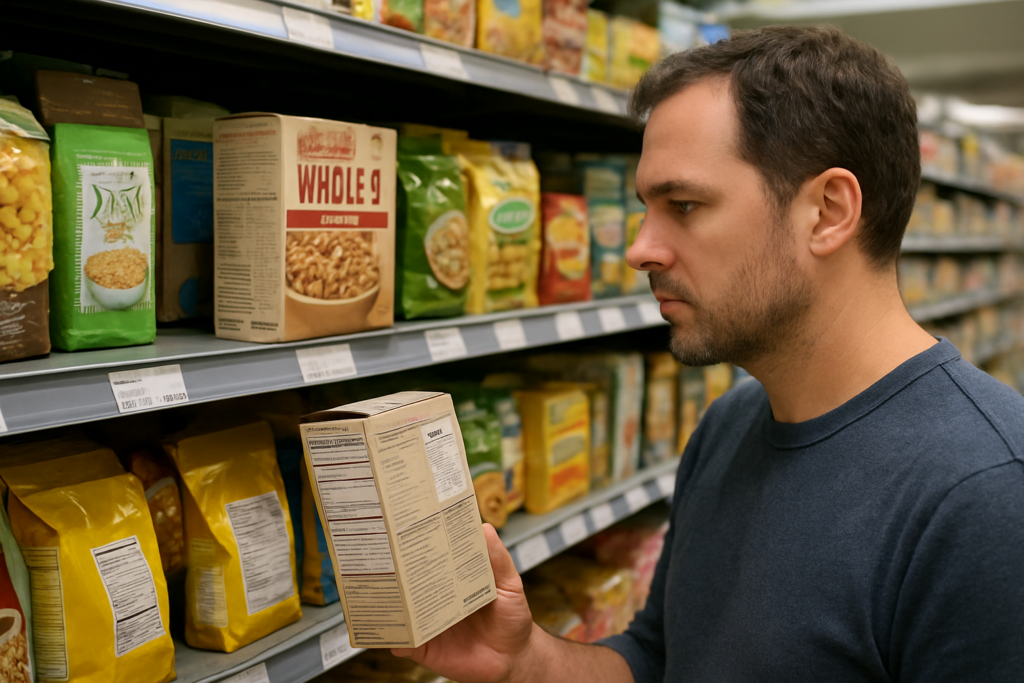
Front-of-pack nutrition labels continue to play an important role in helping shoppers compare packaged foods quickly, according to updated NHS guidance that explains how to read colour-coded labels and use them to make healthier choices. The advice comes as public health agencies keep pushing for clearer food information at the point of purchase, especially for people trying to reduce their intake of fat, saturated fat, sugar and salt.
How the NHS says shoppers should interpret the labels
The NHS guidance sets out clear thresholds for when a food is considered high or low in total fat, saturated fat, sugars and salt. For example, foods with more than 17.5g of fat per 100g are classed as high in fat, while those with 5g of sugars or less per 100g are classed as low in sugars. Similar cut-offs are provided for saturated fat and salt.
The page also explains that front-of-pack labels usually show energy, fat, saturated fat, sugars and salt, sometimes alongside reference intakes. The NHS says this makes it easier to compare products at a glance, though it warns that a manufacturer’s idea of a portion may differ from a shopper’s own serving size.
Colour coding helps identify healthier options quickly
Some labels use red, amber and green colour coding to show whether a food has high, medium or low amounts of fat, saturated fat, sugars and salt. The NHS says green indicates a low amount, amber signals medium, and red means high. In general, foods with mostly green on the label are described as a healthier choice, while products with any red should be eaten less often and in smaller amounts.
The guidance also advises shoppers to check the ingredients list, which must be ordered by weight, because this can reveal whether high-fat ingredients such as cream, butter or oil appear near the top. For ready meals and other pre-packed foods, the NHS recommends looking for labels with more greens and ambers, and fewer reds, when choosing between similar products.
Why the advice matters for everyday diet decisions
Although the guidance is not a new diet plan, it reinforces a simple message: better food choices often start with better information. For consumers trying to manage weight, improve heart health or reduce sugar and salt intake, the label system provides a practical shortcut when shopping under time pressure.
The latest NHS update, last reviewed on 30 June 2026, reflects an ongoing effort to help people understand packaging claims and make more informed decisions about the foods they buy. In a market filled with similar-looking products, the label format gives shoppers a faster way to spot items that fit more closely with a healthier overall diet.
For readers looking to apply the advice, the central takeaway is straightforward: scan the label, compare the colours, check the ingredients and keep an eye on portions. That small habit can make a meaningful difference to the balance of a daily diet.
Photo source: AI-generated or edited image