
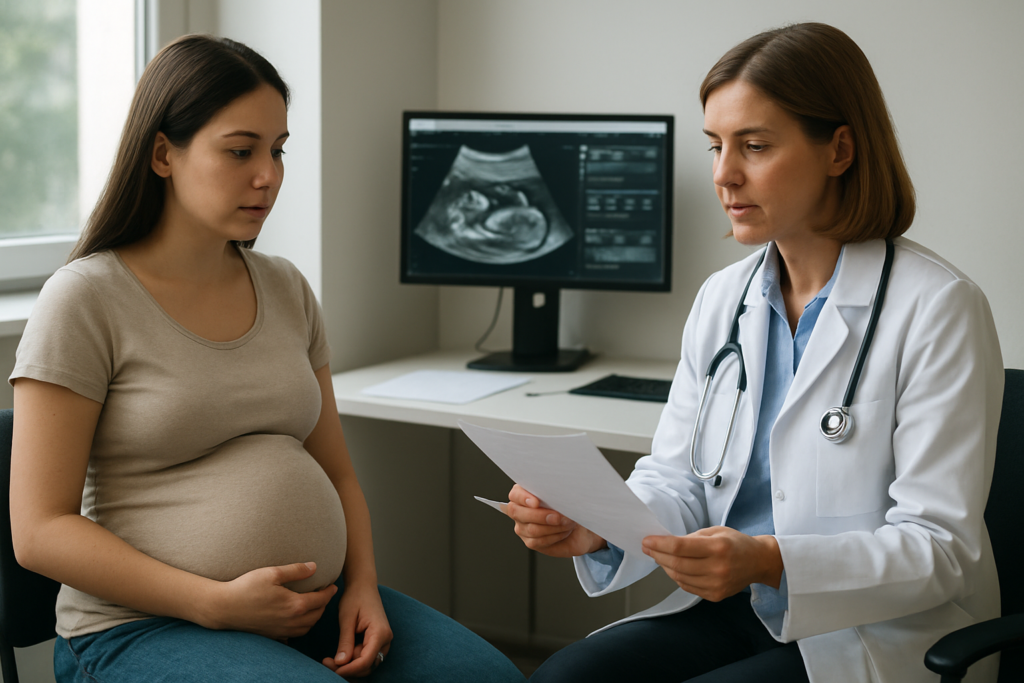
A new study published in Nature Medicine suggests that levels of the protein Isthmin-2, or ISM2, in early pregnancy could help predict preeclampsia and fetal growth restriction. The research, based on serum proteomics from pregnancy cohorts, points to a possible role for ISM2 in extravillous trophoblast invasion, a process central to healthy placental development.
The findings, published on 1 September 2026, indicate that lower ISM2 levels in the first trimester may be associated with a higher risk of both preeclampsia and restricted fetal growth later in pregnancy. The study adds to a growing body of work focused on identifying biomarkers that could support earlier risk assessment and potentially improve antenatal monitoring.
Why the findings matter for pregnancy care
Preeclampsia remains a serious complication of pregnancy, and earlier detection could give clinicians more time to watch for warning signs and tailor care. Fetal growth restriction can also have important consequences for both mother and baby, making reliable early markers an important goal for medical research.
The Nature Medicine article says the work came from exploration of serum proteomics in pregnancy cohorts, offering a data-driven path toward understanding how biological signals in early pregnancy may relate to later outcomes. While the study does not establish a clinical test, it may help shape future research into screening tools and prevention strategies.
What researchers found
The article reports that Miao et al. showed ISM2 is involved in extravillous trophoblast invasion and that lower levels in early pregnancy may indicate increased risk of preeclampsia and fetal growth restriction. That observation could help researchers identify which biological pathways deserve closer attention in follow-up studies.
For now, the work is best viewed as an early step in biomarker research rather than a direct change to clinical practice. But in a field where timing matters, even modest advances in prediction could eventually improve outcomes for pregnant patients and their babies.
As the study enters wider discussion in the medical research community, its main significance lies in the possibility that a measurable early-pregnancy signal could help flag risk long before symptoms appear.
Photo source: AI-generated or edited image