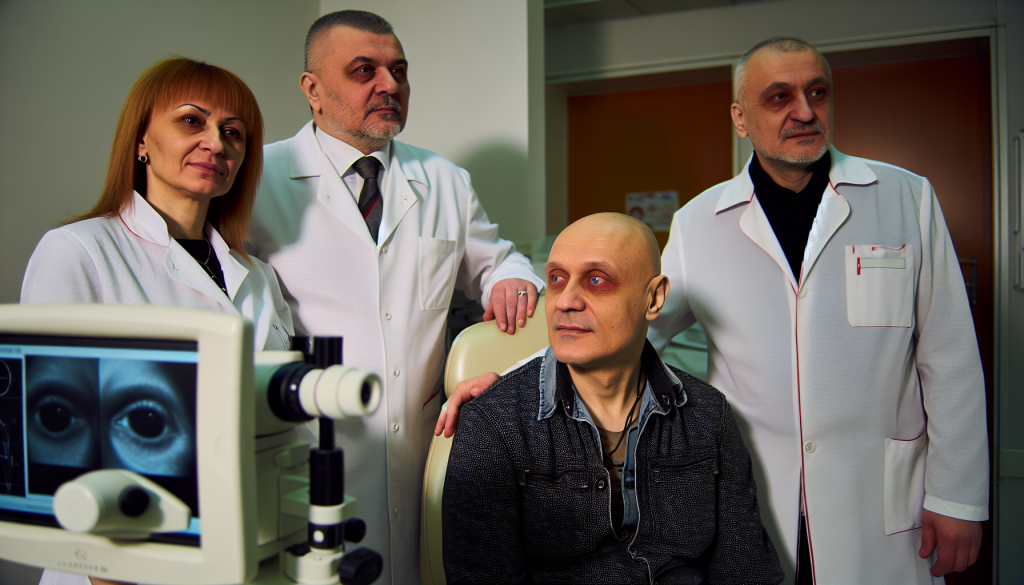
Early-stage trial reports functional gains without serious adverse events
A novel CRISPR-based gene editing therapy produced measurable improvements in vision for patients with a rare inherited retinal disorder in a first-in-human clinical trial, researchers reported on Monday. The multicentre, open-label study assessed safety and preliminary efficacy in adults with biallelic mutations that cause progressive loss of photoreceptor function.
Investigators enrolled 12 participants across three centres, administering a single subretinal dose of the experimental therapy. Over a six-month follow-up period, patients underwent standardised assessments including best-corrected visual acuity, visual field testing and mobility tasks performed under low-light conditions.
Significant functional improvements observed
According to the trial investigators, eight of the 12 participants demonstrated gains on at least one objective measure of visual function. Improvements included an average increase of two lines on the eye chart for several patients and enhanced ability to detect obstacles during mobility testing. No dose-limiting toxicities or unexpected serious adverse events related to the therapy were reported.
Lead clinician Dr Peter Morgan said the results were encouraging but preliminary. ‘These are early signals of potential clinical benefit in a condition with very limited treatment options,’ he said. ‘Longer follow-up and larger, controlled studies are required to confirm durability and to quantify the magnitude of effect.’
Regulatory and ethical context
The therapy employs CRISPR–Cas9 to correct disease-causing mutations directly in retinal cells in vivo, delivered via a viral vector. The approach differs from ex vivo gene therapies by editing cells within the eye rather than modifying cells outside the body and returning them to the patient. Regulators have urged rigorous monitoring for off-target edits and immune responses in such programmes.
Independent experts welcomed the cautious progress. Professor Anna Reid, an ophthalmic geneticist not involved in the study, noted: ‘The eye is an accessible and immunoprivileged site, which makes it an attractive target for in vivo gene editing. Nonetheless, transparency in reporting and long-term surveillance are essential.’
Manufacturers and clinical teams said plans are underway for a randomised phase 2 trial to better establish efficacy endpoints and assess long-term safety over several years. Patient advocacy groups emphasised the need for equitable access and for trial designs that include measures of daily-life functioning.
While the findings mark a milestone for gene editing in ophthalmology, experts cautioned against overinterpretation. The sample size was small and the open-label design limits inference about true treatment effect. Nevertheless, the study represents an important step toward potential new treatments for inherited retinal diseases that currently lead to progressive vision loss and blindness.
Photo source: AI-generated or edited image