
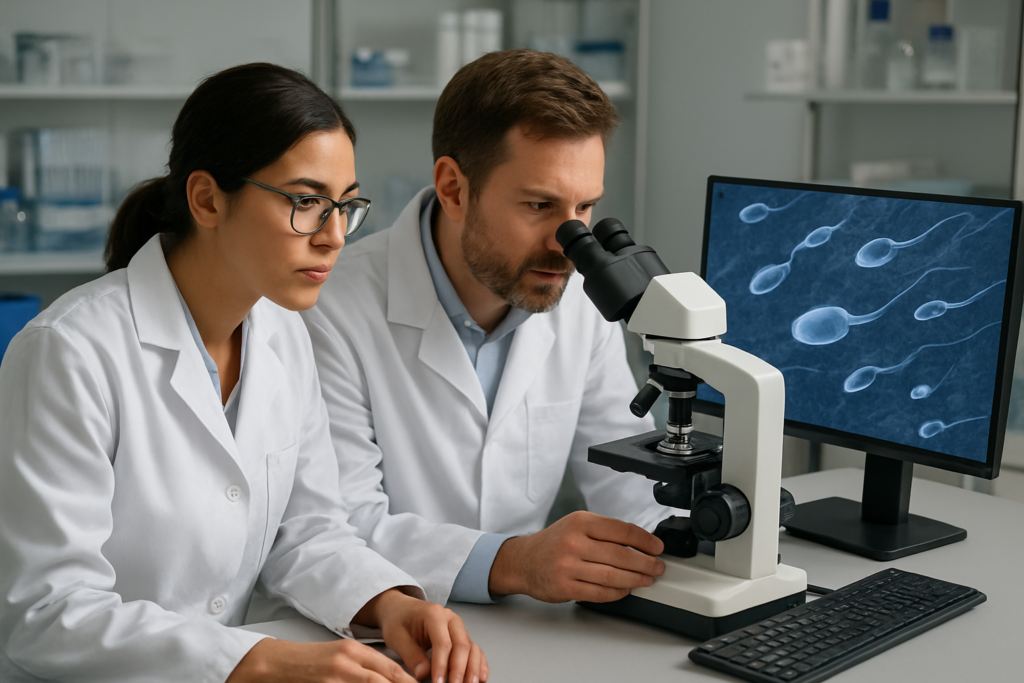
Researchers at VIB, VUB, and the Medical Research Council Laboratory of Molecular Biology in the UK have identified a previously hidden feature inside human sperm cells that could sharpen understanding of male fertility. The study, published in Nature Structural & Molecular Biology, found specialized DNA-free compartments in the sperm nucleus that are packed with proteasomes, the protein-recycling machines that help cells function properly.
The discovery was made using cryo-electron tomography, a high-resolution imaging technique that allowed scientists to examine sperm cells in their native state. The team found that the sperm nucleus contains small cavities, or lacunae, that were once observed by microscopists but never fully understood. These compartments were shown to contain large clusters of proteasomes, revealing an unexpected level of organization inside the sperm head.
A new map of protein recycling inside sperm cells
The researchers not only mapped where these proteasomes sit, but also determined their structure in remarkable detail. That analysis identified unique features that distinguish sperm proteasomes from those found elsewhere in the body, including a previously unknown variant of a sperm-specific proteasome component.
To understand when the structures appear, the scientists examined tissue from human testes. They found that the proteasome-rich compartments emerge during the final stages of sperm development, when genetic material is being reorganized and compacted. The timing suggests that the proteasomes may help guide key steps in sperm maturation and may even remain active after fertilization, possibly helping remodel the paternal genome in the earliest stages of embryonic development.
Why the finding matters for fertility research
According to the researchers, the work provides a new framework for studying how sperm cells develop and what happens immediately after fertilization. It also offers a foundation for future research into male reproductive health, fertility, and early embryonic development.
For clinicians and scientists, the result is significant because defects in sperm development can affect fertility, yet many of the cellular mechanisms involved remain poorly understood. By showing that sperm nuclei contain specialized compartments devoted to protein recycling, the study adds a new layer to the biology of reproduction and may help guide future investigations into infertility.
The findings arrive amid broader efforts to decode the molecular details of reproduction and cell specialization. While the study does not point to an immediate clinical test or treatment, it highlights how advanced imaging and structural biology can uncover biological features that have been overlooked for decades.
Photo source: AI-generated or edited image