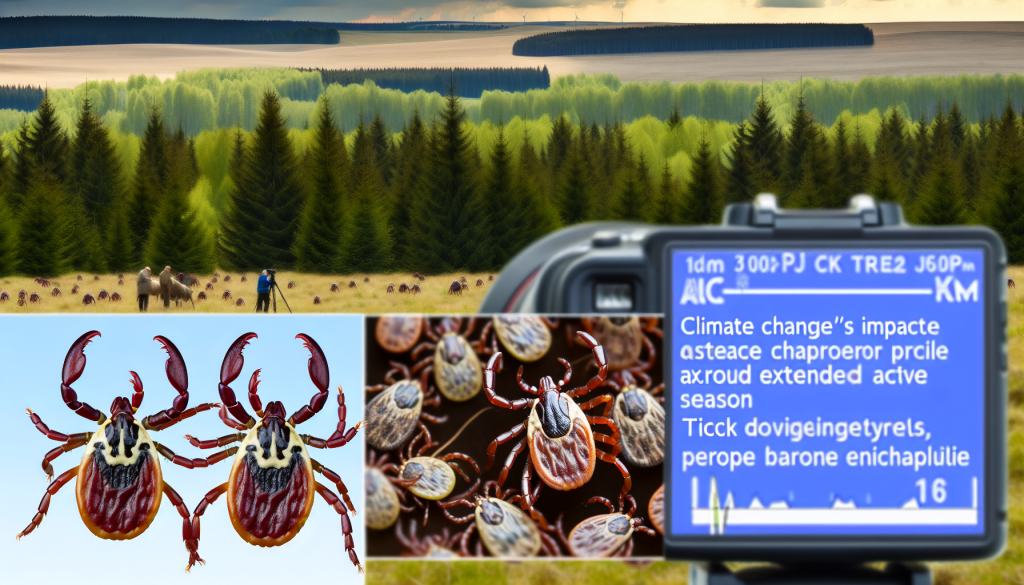
Experts warn of growing public health challenge as tick ranges extend
Health authorities and entomologists are reporting a noticeable expansion of tick activity across much of Europe, a trend they attribute to changing climatic conditions and shifting land use. The phenomenon is associated with a rise in cases of tick‑borne infections such as Lyme borreliosis and tick‑borne encephalitis (TBE) in regions previously considered low‑risk, raising concerns for clinicians, public health planners and outdoor workers.
Surveillance data point to shifting patterns
Recent surveillance summaries from national public health agencies indicate that ticks are now active for longer periods during the year and have colonised higher latitudes and altitudes. Experts say warmer winters, milder springs and changes in precipitation patterns create more favourable conditions for tick survival and for the small mammal and bird hosts that maintain tick populations. While incidence varies by country, clinicians report seeing cases earlier in the season and in locations where patient presentations were uncommon a decade ago.
Clinical and healthcare implications
The shift in distribution is presenting practical challenges for diagnosis and treatment. General practitioners in newly affected areas may be less familiar with the early signs of Lyme disease or the presentation of TBE, potentially delaying appropriate care. Although Lyme borreliosis is typically treatable with antibiotics, delayed recognition can lead to more severe manifestations. Vaccination programmes for TBE exist in some countries, but uptake and availability differ widely.
Public health services are under increased pressure to update guidelines, allocate resources for laboratory testing, and ensure clinicians receive timely education on recognising and managing tick‑borne conditions. Laboratory capacity and reporting systems will be important to track changes in incidence and to inform targeted responses.
Prevention and public advice
Authorities are expanding preventive messaging aimed at people who live, work or recreate outdoors. Recommended measures include wearing appropriate clothing, using insect repellents registered for ticks, conducting systematic tick checks after exposure, and promptly removing attached ticks with fine‑tipped tweezers. In areas where TBE vaccination is advised, health services are encouraging at‑risk groups to seek immunisation. Land managers and local governments are also considering habitat management strategies to reduce tick density in public spaces.
Research and policy responses
Researchers emphasise the need for coordinated surveillance across borders, improved ecological modelling, and investment in vaccine and diagnostic research. Policymakers face decisions on resource allocation for prevention, vaccination programmes and public education campaigns. International collaboration will be important, given the transboundary nature of vector spread and the influence of large‑scale climatic drivers.
Experts stress that while the risk of severe outcomes remains relatively low for most people, the expanding geographic reach of ticks necessitates heightened vigilance from health services and the public. Prompt recognition, prevention measures and strong surveillance systems are cited as key to limiting the health burden as ecological conditions continue to evolve.
Photo source: AI-generated or edited image