
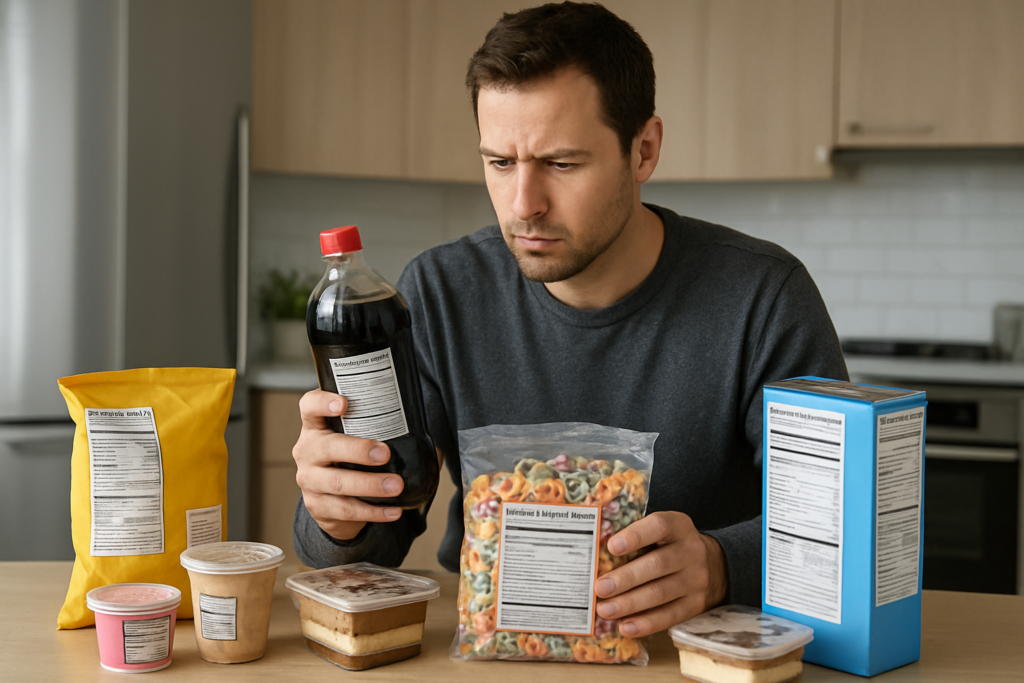
A large new analysis of UK Biobank data suggests that not all ultra-processed foods carry the same mental health signal. Researchers reported that greater estimated exposure to foods containing flavorings, coloring agents and sweeteners was dose-dependently associated with a higher risk of incident depression over 10.7 years, while the findings pointed to specific markers rather than ultra-processed foods as a whole. News Medical
What the study found
The analysis included 171,818 adults and examined dietary exposure over a long follow-up period. According to the report, the relationship between these food markers and depression risk strengthened with higher exposure, raising the possibility that some additives or the kinds of foods that contain them may help explain previously observed links between ultra-processed food intake and mood outcomes.
News Medical described the study as suggesting that flavorings, coloring agents and sweeteners may be more informative markers than the broad ultra-processed food label itself. That distinction matters because it shifts attention from a single umbrella category to the specific components that may be driving risk.
Why the finding matters for diet and mental health
The result adds to a growing body of nutrition research trying to separate the effects of food processing from the effects of individual ingredients. For clinicians and public health officials in the UK, that nuance could be important when advising patients who are trying to improve both diet quality and mental wellbeing.
The study does not prove that the additives caused depression, and it does not mean every food containing these markers is harmful. But the dose-response pattern reported in the UK Biobank analysis suggests the association was not random, and it may help guide future research into how processed foods influence brain health.
A narrower question for future nutrition research
Rather than treating all ultra-processed foods as identical, the new findings support a more detailed approach that looks at composition, exposure and long-term health outcomes separately. That could help researchers identify which dietary patterns deserve the most attention in prevention strategies, and which foods are simply being grouped together under a label that may be too broad.
For now, the study adds a fresh layer to the debate over diet and depression by suggesting that certain additives, or the products that contain them, may be more relevant than ultra-processed foods in general. The work is likely to draw interest from nutrition scientists, mental health researchers and policymakers looking for clearer answers about how diet affects long-term health.
Photo source: AI-generated or edited image