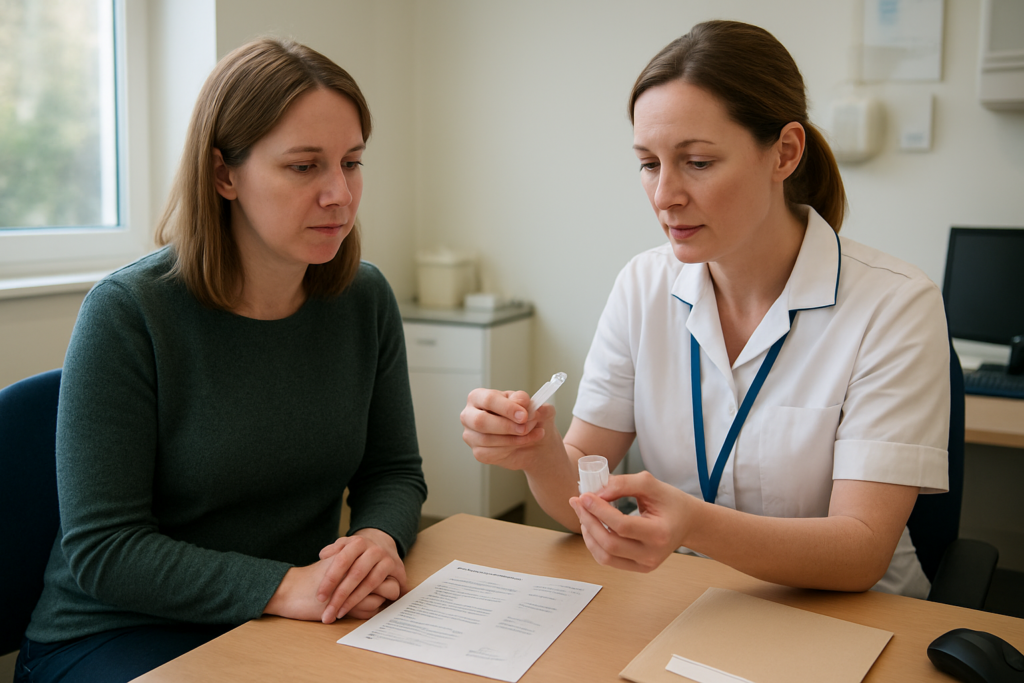

Two non-invasive tests are now being used in primary care to help speed up the diagnosis of endometriosis in England, after a recommendation from the National Institute for Health and Care Excellence, according to The BMJ. Experts described the development as potentially “game changing” because it could reduce the long wait many patients face before getting a diagnosis.
The BMJ reported that the average wait to diagnose endometriosis in the UK is currently more than nine years, and that this rises to 11 years for people from ethnically diverse communities. The new tests are intended to support earlier identification while further evidence on their accuracy is collected, giving clinicians another route to assess patients who may otherwise spend years without answers. BMJ report
Why the change matters for patients
Endometriosis is a chronic condition that can cause significant symptoms and is often difficult to diagnose. The BMJ said the new tests could help cut the time to diagnosis in primary care, where patients frequently begin their search for help. For many people, the delay has meant prolonged pain, uncertainty, and repeated appointments before reaching specialist care.
The move also reflects a broader effort to improve recognition of conditions that have historically been underdiagnosed or diagnosed late. In the UK, that matters not only for symptom management but also for reducing the risk of long-term impact linked to delayed treatment.
Part of a wider pattern of diagnostic improvement
The BMJ’s report placed the endometriosis tests alongside other recent medical developments, including a vaccine expansion for gonorrhoea and concerns about cuts to medical academic funding. The endometriosis update stood out because it directly addresses a major diagnostic bottleneck in everyday care.
While the tests are not described as a final answer, the recommendation allows them to be used now as evidence continues to build. That approach aims to balance faster access for patients with the need for ongoing evaluation of clinical performance.
For patients living with unexplained pelvic pain, heavy periods, or other symptoms associated with endometriosis, the change may offer a quicker route to investigation and treatment. For clinicians, it adds a new tool in a condition that has long been associated with delayed recognition and fragmented pathways to care.
The development is likely to be watched closely across the NHS as services consider how best to incorporate the tests into routine practice. If they help shorten diagnostic delays in the way experts hope, they could mark an important step forward in women’s health care in England.
Photo source: AI-generated or edited image