
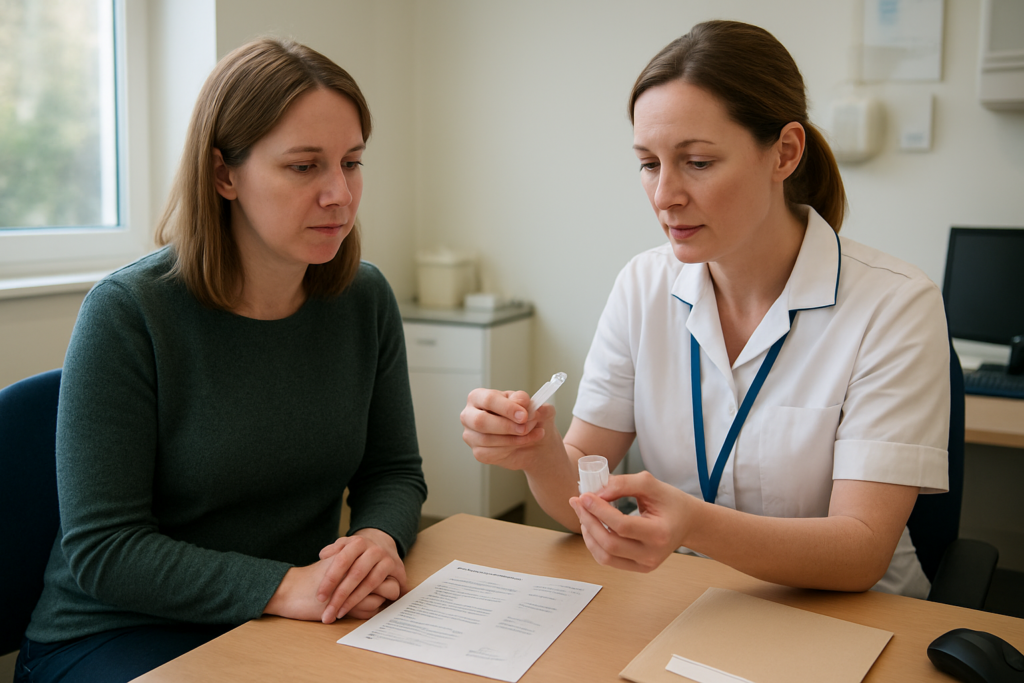
A new recommendation from NICE says a single saliva test could help speed up the diagnosis of endometriosis in primary care, offering a possible shift in how the condition is identified in England. The guidance was reported by The BMJ on September 16, 2026, and places the test among the latest developments in women’s health and diagnostic care in the UK.
A potential shortcut in a long diagnostic journey
Endometriosis is often associated with delayed diagnosis, and the latest NICE recommendation reflects ongoing efforts to make assessment faster and less dependent on repeated referrals. The BMJ’s report does not provide additional technical details in the listing, but it identifies the saliva test as a tool intended to speed up diagnosis in primary care.
The development comes at a time when UK health services continue to face pressure to improve access to timely testing and specialist care. In the same period, The BMJ also highlighted other major UK health stories, including a life-extending breast cancer drug becoming available on the NHS in England and concerns about asthma testing for children.
Why the recommendation matters
If adopted widely, a simpler diagnostic pathway could reduce the time many patients spend waiting for answers and treatment. The BMJ’s coverage places the endometriosis recommendation alongside other recent NHS and NICE-related stories, underscoring how diagnostic access remains a major issue across UK healthcare.
For clinicians, a faster and more accessible primary-care test could help triage cases earlier and potentially streamline onward referral. For patients, the main significance is the prospect of reaching a diagnosis sooner, although the BMJ listing alone does not detail implementation timelines or rollout plans.
A broader wave of late-breaking health policy changes
The recommendation arrives during a particularly busy week for medical news in the UK. On the same BMJ news page, stories also covered a call for cosmetic surgery patients to be screened for body dysmorphia, NHS concerns over drug pricing, and an online memorial for health and care workers who died by suicide.
That cluster of stories suggests a health system still grappling with both clinical innovation and operational strain. In that context, a diagnostic step designed to make endometriosis recognition easier stands out as a practical, patient-facing change with clear relevance to everyday care.
As more details emerge, the key question will be how quickly the test can be integrated into routine primary care and how much difference it makes in real-world diagnosis pathways. For now, the NICE recommendation marks another notable move toward earlier detection in women’s health.
Photo source: AI-generated or edited image