
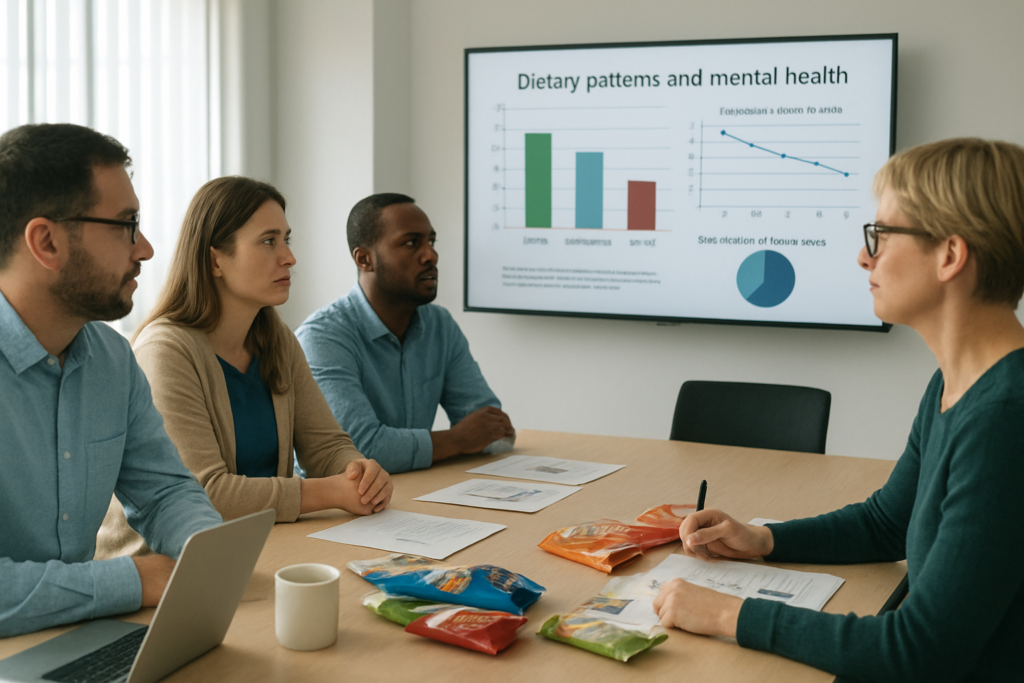
A new UK Biobank analysis suggests that not all ultra-processed foods may carry the same mental health implications, with exposure to foods containing flavorings, colouring agents and sweeteners associated with a higher risk of incident depression over more than a decade of follow-up.
What the study found
The research, highlighted by News-Medical on September 1, 2026, examined 171,818 adults and reported that greater estimated exposure to these specific markers was dose-dependently linked to a higher risk of depression over 10.7 years. The findings suggest that the relationship between diet and depression may be better understood by looking at particular ingredients and markers, rather than treating ultra-processed foods as one uniform category.
The study does not mean that one specific product automatically causes depression, but it does add to a growing body of evidence that the nutritional profile and processing features of foods may matter for long-term health outcomes. In practical terms, it points researchers toward a more detailed way of assessing the links between diet quality and mental health.
Why the result matters for diet and nutrition
Ultra-processed foods have been widely discussed in relation to obesity, diabetes and other chronic conditions, but this study shifts attention to a more specific question: which elements of highly processed foods may be driving risk. By focusing on flavourings, colours and sweeteners, the researchers are suggesting that certain formulation markers could help explain why associations between ultra-processed food intake and depression have been observed in previous work.
For clinicians and public health specialists in the UK, the study adds another piece to the discussion about how diet may influence wellbeing across the life course. It also reinforces the idea that dietary research is moving beyond broad food labels and toward more detailed pattern analysis.
A broader picture of recent nutrition research
Other recent nutrition research has also continued to examine how specific dietary patterns affect health. In a separate study published today in the European Journal of Clinical Nutrition, maternal dietary patterns during pregnancy were linked with pregnancy and newborn outcomes, underscoring how diet can shape health at different stages of life.
Taken together, these findings reflect a wider scientific trend: rather than asking only whether a diet is “healthy” or “unhealthy,” researchers are increasingly trying to identify which components, patterns and food-processing features matter most.
As with any observational study, the latest analysis points to association rather than proof of cause and effect. Still, its scale and focus make it a noteworthy addition to the nutrition debate, especially as policymakers and health professionals continue to assess the impact of ultra-processed foods on public health.
News-Medical diet and nutrition coverage provides the original summary of the study, while the European Journal of Clinical Nutrition has published a separate paper on maternal dietary patterns and pregnancy outcomes.
Photo source: AI-generated or edited image