
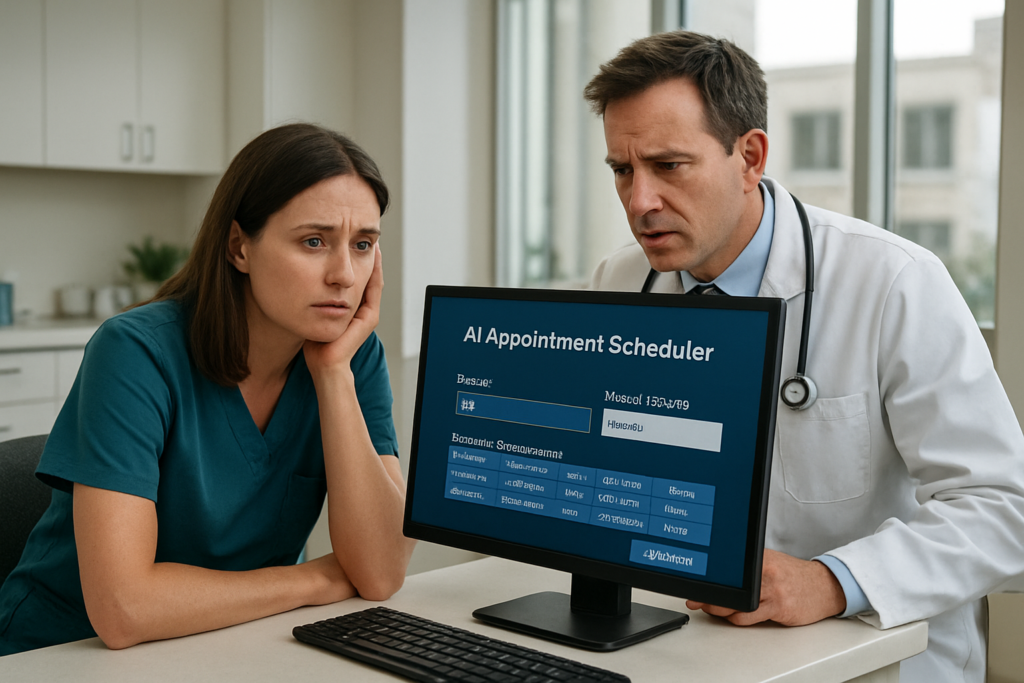
A new report has added to growing concerns about how artificial intelligence is being introduced into frontline healthcare, after a GP AI receptionist was found to struggle with patients who speak with accents. The BMJ reported on September 1, 2026, that the system was failing to understand some callers, raising questions about safety, access, and the practical limits of automation in general practice.
The finding comes at a time when the NHS is facing intense pressure to modernise services while maintaining reliable care for patients across England. The BMJ’s news coverage places the issue alongside other developments on the same day, including warnings from NHS leaders that ADHD and autism costs are “out of control,” and a report that childhood vaccination rates are falling in babies.
Questions over whether AI can handle real-world patient communication
According to The BMJ, the new concerns centre on whether AI tools can manage the variety of voices, speech patterns, and accents encountered in everyday practice. That issue is especially important in a diverse healthcare system such as the NHS, where reception and triage systems are often the first point of contact for patients seeking help.
The report adds to a wider debate over the use of AI in healthcare, where supporters argue that digital tools can improve speed and efficiency, but critics warn that poorly tested systems could exclude patients or create new safety risks. In this case, the concern is not only technical performance but also whether access to care could be made harder for people whose speech is not well recognised by the software.
NHS digital ambitions face scrutiny
The BMJ has repeatedly covered pressure points in the NHS, including patient data systems, referral pathways, and workforce shortages, and this latest report fits into that broader pattern of scrutiny over digital reform. Recent BMJ headlines also show continuing concern about how technology is being used across the health service, from Palantir-related data issues to questions about AI use in clinical settings.
For practices under strain, AI receptionists may appear to offer a practical solution for handling calls and directing patients. But the latest findings suggest that any rollout needs careful testing in real-world conditions, especially when communication failures could delay appointments, frustrate patients, or lead to missed clinical needs.
What the report means for patients
The central concern is straightforward: if a patient cannot be understood accurately, they may not receive the right advice at the right time. In primary care, where early contact often determines how quickly someone is assessed, even small errors in automated systems can have outsized consequences. That is why the latest report is likely to intensify calls for stronger oversight, clearer standards, and more transparency around how healthcare AI is evaluated before it is widely adopted.
The BMJ’s report does not suggest that AI should be removed from healthcare altogether. Instead, it highlights a more cautious message: digital tools must work for the full range of patients they are meant to serve. As the NHS continues to explore automation, the challenge will be ensuring that efficiency does not come at the expense of access, fairness, or safety.
Photo source: AI-generated or edited image