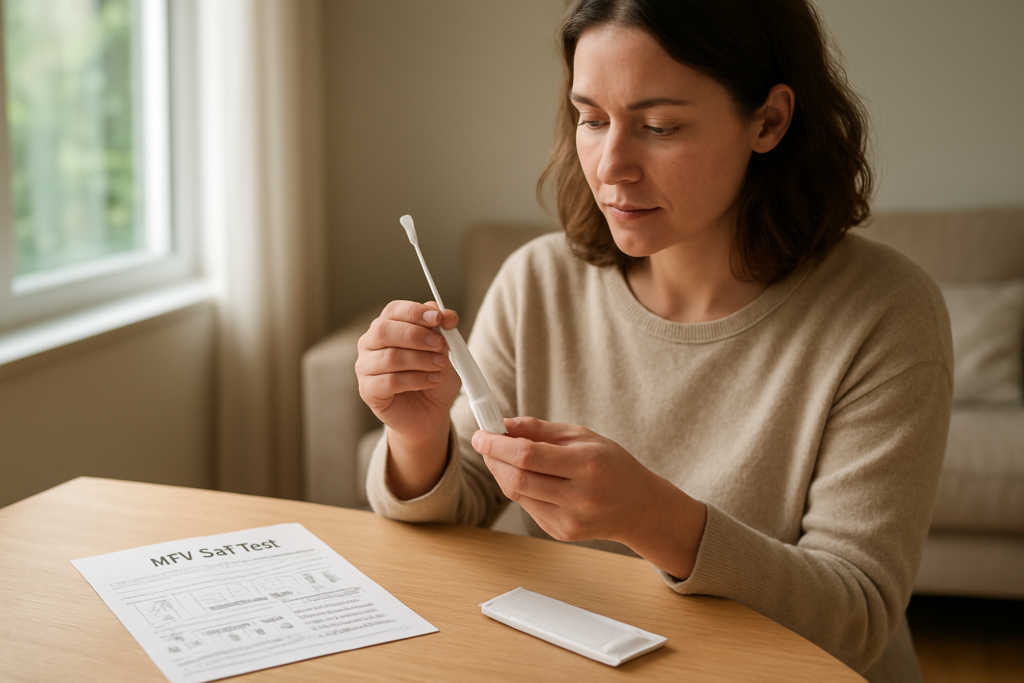
The NHS has begun rolling out home HPV self-testing kits for women who have not attended cervical screening appointments, in a move designed to improve uptake and help detect a virus linked to cervical cancer. Nearly 4 million women are expected to be offered the discreet kits as part of the national programme in England. NHS England announcement
A new route into cervical screening
The test uses a swab, similar to a long cotton bud, to collect a sample from the vagina. The sample is then posted back for free testing for high-risk HPV, which can increase the risk of cervical cancer. Women who test positive will be invited for a follow-up cervical screening appointment at a GP surgery or sexual health clinic, where a clinician will take a sample from the cervix to check for cell changes.
According to NHS England, the rollout targets people who have not kept up to date with routine screening and aims to offer a more discreet and convenient option. England’s leading women’s health doctor described the move as a “gamechanger,” saying a significant share of eligible women are not currently up to date with cervical screening.
Why the change matters
Cervical screening is a key part of preventing cervical cancer, because it can detect HPV and identify changes before they develop into disease. NHS leaders say the self-testing option is intended to remove some of the barriers that keep people from attending in-person appointments, while still preserving a pathway to further assessment when needed.
The initiative also fits into the wider Cervical Cancer Elimination Plan for England, which aims to improve uptake and coverage of HPV vaccination and cervical screening. NHS London has said self-swabbing is now being offered at every GP in London, with some women also invited through the NHS App as part of the national rollout.
Part of a wider public health push
The announcement comes as the NHS continues to expand prevention-focused services, including efforts to improve screening access and earlier detection of serious disease. By sending kits directly to women who have missed appointments, the health service is hoping to reach those most likely to benefit from a simpler screening route.
Public health officials say the success of the programme will depend on how many women use the kits and complete follow-up appointments if HPV is found. The NHS has presented the scheme as a practical step toward reducing the number of women who fall behind on screening and missing opportunities for early intervention.
For many patients, the appeal may be straightforward: a test done privately at home, returned by post, and followed by clinical care only if needed. If the rollout achieves broad participation, it could become one of the most visible screening changes in England this year.
Photo source: AI-generated or edited image