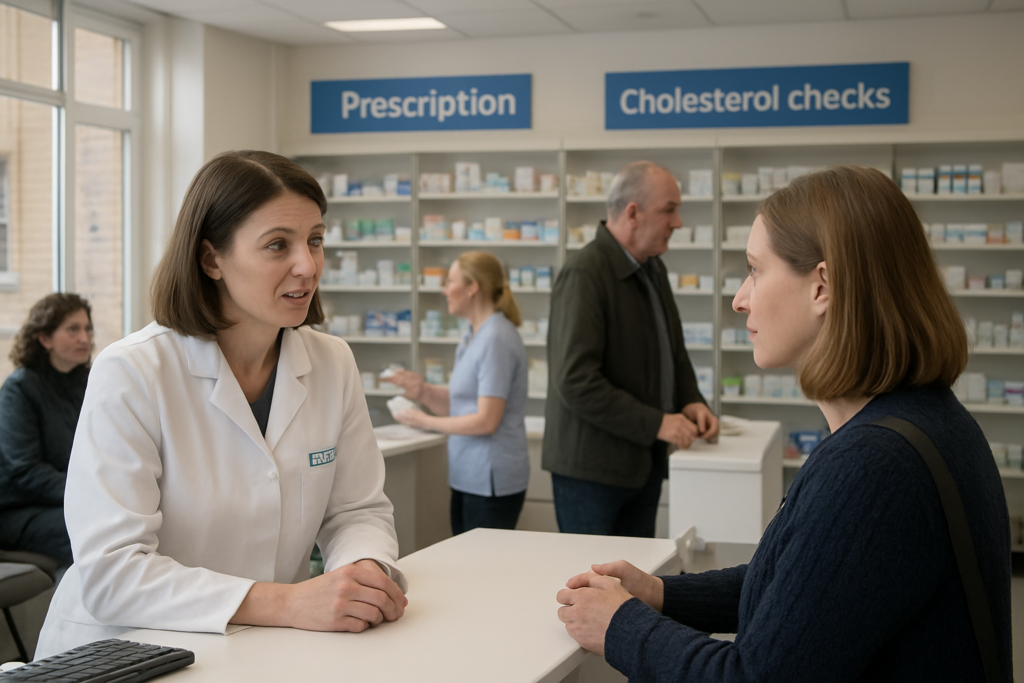
High-street pharmacies in England are set to begin offering seven-minute cholesterol checks this autumn, in a move the NHS says is designed to help reduce heart disease and stroke deaths over the next decade.
The programme will be delivered at around 100 NHS pharmacies and is aimed at people aged 40 to 84 who are not pregnant and have not had a blood test in the past year. NHS England said the service is part of a broader drive to cut heart disease and stroke deaths by a quarter over the next 10 years.
Pharmacies to play a bigger role in early detection
The new checks are intended to make it easier for people to access screening without needing a separate GP appointment. According to NHS England, the service will be available in community pharmacies, expanding the role of local pharmacists in spotting people who may be at risk of cardiovascular disease.
The announcement comes alongside wider NHS activity focused on prevention. On the same day, the health service also said people with cardiovascular disease could soon be offered Wegovy on the NHS, reflecting a continued emphasis on reducing the long-term burden of heart attacks and strokes through earlier intervention and treatment.
Why the timing matters for prevention
Heart disease remains one of the main conditions the NHS is targeting through more community-based care. By moving checks into pharmacies, the service hopes to identify people who may otherwise go undiagnosed until they develop more serious symptoms or complications.
NHS England said people who are eligible for the cholesterol checks will include adults in the age group most commonly invited for cardiovascular risk assessment. The aim is to pick up raised cholesterol earlier, when lifestyle changes or treatment can still make a difference.
Part of a wider push to reduce cardiovascular risk
The pharmacy rollout follows other recent NHS measures focused on prevention, including the planned expansion of treatment options for people at higher cardiovascular risk. Together, these steps suggest a growing emphasis on catching disease earlier and intervening before it leads to hospital admissions or life-threatening events.
For patients, the appeal is likely to be convenience as much as speed. For the NHS, the hope is that making screening easier to access will translate into earlier diagnosis, better treatment uptake and fewer serious heart and stroke events in the years ahead.
Photo source: AI-generated or edited image