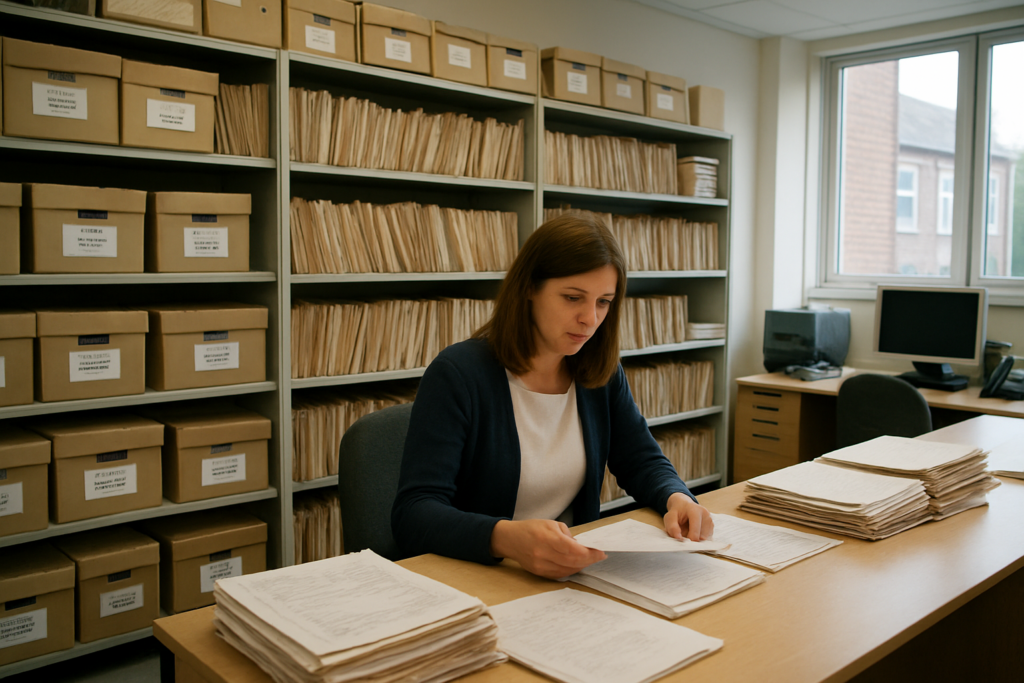
The NHS is spending about £240 million a year to store patient records, according to a BMJ report that says the continued use of paper is driving up costs across the health service. The story, published on August 17, 2026, adds to growing concerns about the pace of digitisation in England’s hospitals and the burden that legacy systems still place on frontline care.
The report says that, despite repeated pushes to modernise records management, many NHS organisations are still handling large volumes of paper files. That means extra storage, more administration and added operational pressure at a time when services are already strained by demand, staffing challenges and delayed discharges.
BMJ’s coverage frames the spending as more than an administrative inconvenience. Keeping paper records in storage has become a recurring cost, while the lack of full digital adoption can slow access to information when clinicians need it most. For hospitals, that can affect efficiency in day-to-day care and make it harder to run services smoothly.
Why the issue matters for patient care
The article places the figures in the wider context of NHS reform, where digital systems are often presented as a way to cut waste and improve continuity of care. In practice, however, the persistence of paper records suggests that implementation remains uneven, and that some trusts are still managing hybrid systems rather than fully digital workflows.
That matters because records are central to safe clinical decision-making. When information is harder to retrieve, or stored across both paper and electronic formats, staff may spend more time searching for details instead of treating patients. The BMJ report suggests the cost of that inefficiency is being paid not only in money, but also in lost time and administrative strain.
A broader pattern of NHS operational pressure
The findings sit alongside other recent BMJ reporting on NHS pressures, from staffing concerns to the strain on hospital capacity. In that environment, the cost of storing paper files may seem small compared with major clinical budgets, but the report argues it is part of a wider picture of avoidable spending and outdated infrastructure.
As the health service continues to invest in digital transformation, the persistence of paper records raises a practical question: how quickly can the NHS move from partial reform to fully integrated systems? The BMJ story suggests that, for now, the answer remains uncertain, with a significant share of the system still tied to older ways of working.
For patients and staff, the significance is straightforward. Every pound spent on storing paper records is a pound not available for direct care, and every delay caused by fragmented information is another reminder that the NHS’s digital transition is still unfinished.
Source: The BMJ Medical news
Photo source: AI-generated or edited image