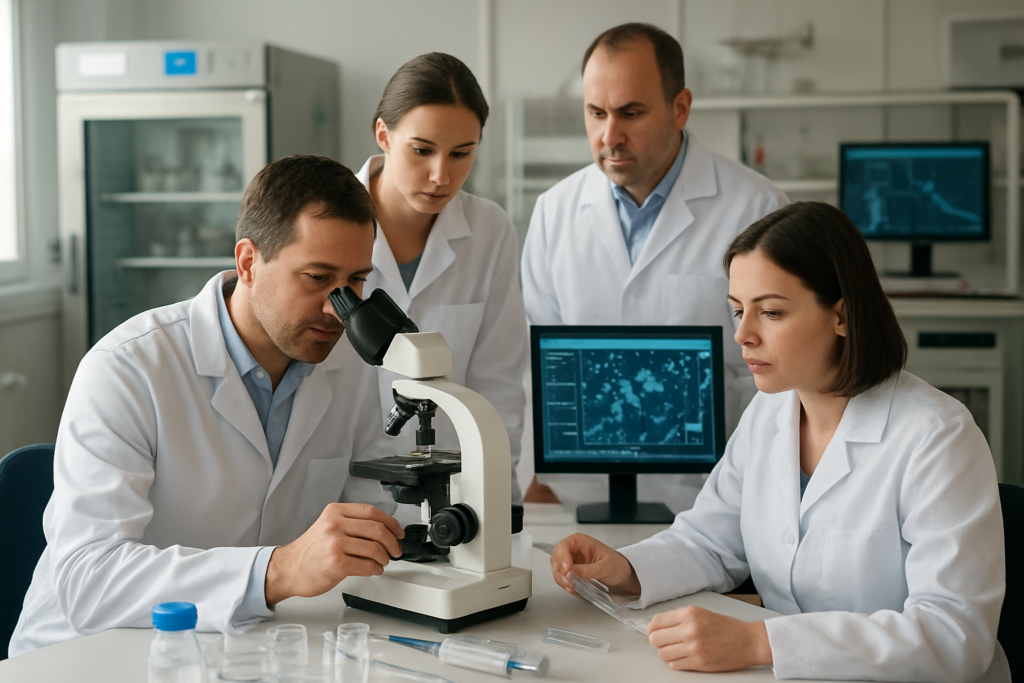
Researchers funded by the National Institutes of Health have shown that human brain organoids can continue developing for nearly six years, revealing features of later-stage brain maturation that could help scientists study neurodevelopmental disorders over much longer timelines than before.
A longer window into brain development
The findings, published on August 19, 2026, build on earlier work showing that organoids can serve as simplified models of human tissue. In this study, the team tracked gene expression, biological age and cell structure at single-cell resolution, finding that the models developed in a slow and realistic cadence similar to the human brain.
Researchers reported the emergence and maturation of neurons and supporting glial cells, along with signatures of postnatal development. They also found that neurons formed connections and fired electrical signals that the organoids sustained for at least two years.
What the study could mean for future research
According to the NIH summary, the breakthrough could make long-term bench-top studies of conditions such as autism more feasible, especially because direct examination of human brain development at a cellular level is often not possible. The authors said future work may add anatomical complexity, simulate developmental disorders or test experimental interventions.
Paola Arlotta and colleagues led the research, which was supported by NIH grants from the National Institute of Mental Health, the National Institute on Aging and the National Institute of Biomedical Imaging and Bioengineering. The full study was published in Nature.
While organoids remain simplified models rather than full replicas of the human brain, the new results suggest they may now capture a much broader developmental arc than previously thought possible, opening the door to deeper study of how the brain matures after birth.
Read more from the NIH summary here: NIH release and from Nature Medicine’s recent coverage of related neuroscience and biomedical research trends here: Nature Medicine news and comment.
Photo source: AI-generated or edited image