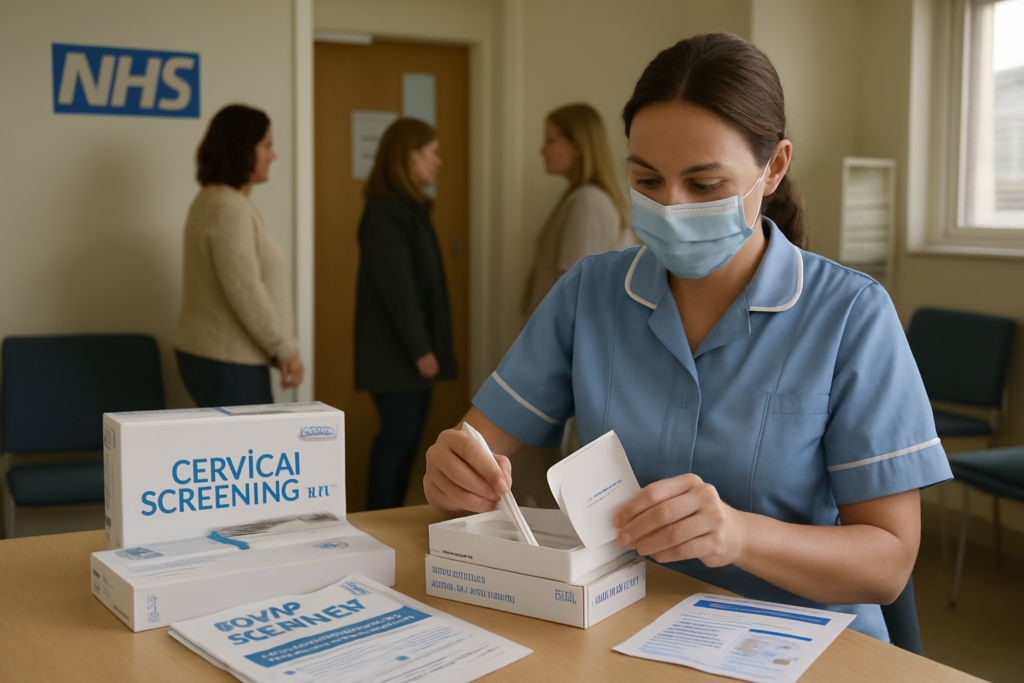
The NHS is expanding access to cervical cancer screening this autumn by allowing eligible women and people with a cervix in parts of England to order home HPV self-testing kits through the NHS App, text message, email or letter. The move is designed to make screening easier to access and to improve uptake, after NHS England said the latest figures showed 68.8% of eligible women were up to date with cervical screening, below the 80% target.
According to NHS England, the programme is part of a wider push to eliminate cervical cancer by 2040 by increasing HPV vaccination and screening attendance. The first phase of the home-testing rollout is being introduced in autumn 2026, building on earlier pilots and local self-screening schemes already under way in London and other areas.
How the new self-testing pathway works
Under the new offer, selected eligible people can request a kit at home and use it to collect a sample for HPV testing. If high-risk HPV is found, they will be invited to book a follow-up cervical screening appointment at their GP surgery or sexual health clinic, where a clinician will take a sample from the cervix to check for cell changes. The NHS says the aim is to remove practical barriers that can stop people from attending traditional appointments.
The rollout follows NHS guidance that cervical screening uses primary HPV testing as the first test on a cervical screening sample, with invitations normally sent through the NHS App, by text or by letter. People who are registered as female with a GP are usually invited automatically, while those registered in other ways may need to contact their GP surgery or sexual health service if they want to be included in the programme. NHS England announcement
Why the NHS is pushing for higher uptake
Cervical screening is intended to detect HPV-related risk before cancer develops, and NHS England has described the new home-testing approach as a key step in improving coverage. The service has already reported local progress in London, where self-screening has been introduced in every GP setting and thousands of women have chosen to take part. NHS London has said the wider goal is to help achieve the national ambition of eliminating cervical cancer by 2040. NHS London self-screening update
The programme also comes as NHS data continue to show gaps in screening participation. NHS England said the current cervical screening coverage remains below its target, underlining the challenge of reaching people who have not responded to traditional invitations. The service has encouraged people who are invited to attend screening to do so promptly, and to seek medical advice sooner if they notice symptoms such as bleeding between periods, after sex, or after the menopause, as well as unusual vaginal discharge.
A broader prevention strategy
The home-testing expansion sits within a wider prevention agenda that includes vaccination, earlier diagnosis and easier access to screening. NHS England says cervical screening remains one of the main tools for preventing cervical cancer, and its latest changes are intended to make the pathway simpler for people who might otherwise delay or avoid testing.
For now, the new kit offer is being rolled out gradually, but NHS leaders are framing it as a significant step toward a more accessible screening system and, ultimately, fewer cervical cancer cases in the years ahead.
Photo source: AI-generated or edited image