A new California law aimed at phasing out ultra-processed foods from public school menus could reshape what millions of children eat at school, but a Stanford Medicine study suggests the transition may be far more difficult than lawmakers expect.
Starting in July 2029, public schools in California must begin removing ultra-processed foods under a measure that targets foods high in sugar, fat, salt and certain artificial additives. The law, known as the Real Food, Healthy Kids Act, sets a long runway for schools to adjust, with the full elimination of certain ultra-processed items required by July 1, 2035. But researchers say the biggest obstacles may not be scientific — they are practical.
According to the study published in Public Health Nutrition, school food service directors identified budget constraints, limited staff, procurement difficulties and inadequate kitchen infrastructure as the main barriers to implementation. The researchers interviewed directors from 20 school districts in California’s San Joaquin Valley, where many low-income families depend on school meals, and found broad concern that healthier menus will require more money, more time and more equipment than many districts currently have.
Budget pressures and kitchen limits could slow reform
One of the clearest findings was that less-processed foods tend to cost more and are harder to source in the quantities schools need. Food service directors said the shift away from inexpensive heat-and-serve items would strain already tight budgets, especially in districts that rely on foods designed for minimal preparation.
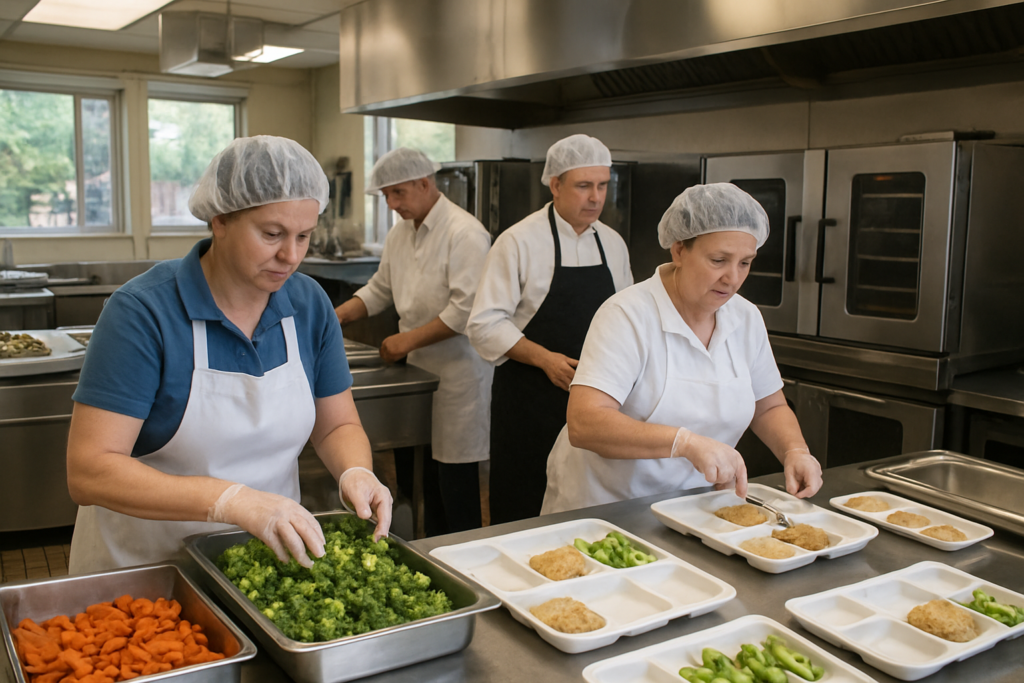
The study also highlighted infrastructure problems. Many schools do not have fully equipped kitchens, and some cafeterias are built only for reheating food. In several cases, districts would need new sinks, drains and hoods to meet permitting standards for scratch cooking, changes that could cost millions of dollars and fall outside normal cafeteria budgets.
Staffing is another major concern. Schools often rely on part-time employees trained to heat and serve food rather than cook from scratch. Moving to a more labor-intensive model would require more staff time, additional training and higher salaries and benefits.
What the researchers say policymakers should expect
The study’s authors argue that legislators may need to direct more funding to school food budgets if the law is to work in practice. One researcher said the goal is worthwhile, but districts will likely struggle unless they receive support to cover the real costs of implementation.
The findings come as California and other states weigh how to improve school meals while reducing children’s exposure to ultra-processed foods. The new law also reflects a broader policy push to make school food healthier, but the study suggests that success will depend on whether schools can afford the transition and adapt their kitchens, supply chains and staffing models.
For districts that have already moved toward scratch cooking, the researchers say community engagement and creative planning can help. Some schools have used grant funding, chef-led menu development and student involvement to make healthier meals more acceptable. Even so, the study concludes that healthier school food may require an upfront investment before any long-term health gains appear.
For children, the policy could eventually mean fewer highly processed foods on the school menu. For schools, the question is whether the system is ready to deliver that change at scale.
Source: News-Medical report on the Stanford Medicine study
Photo source: AI-generated or edited image