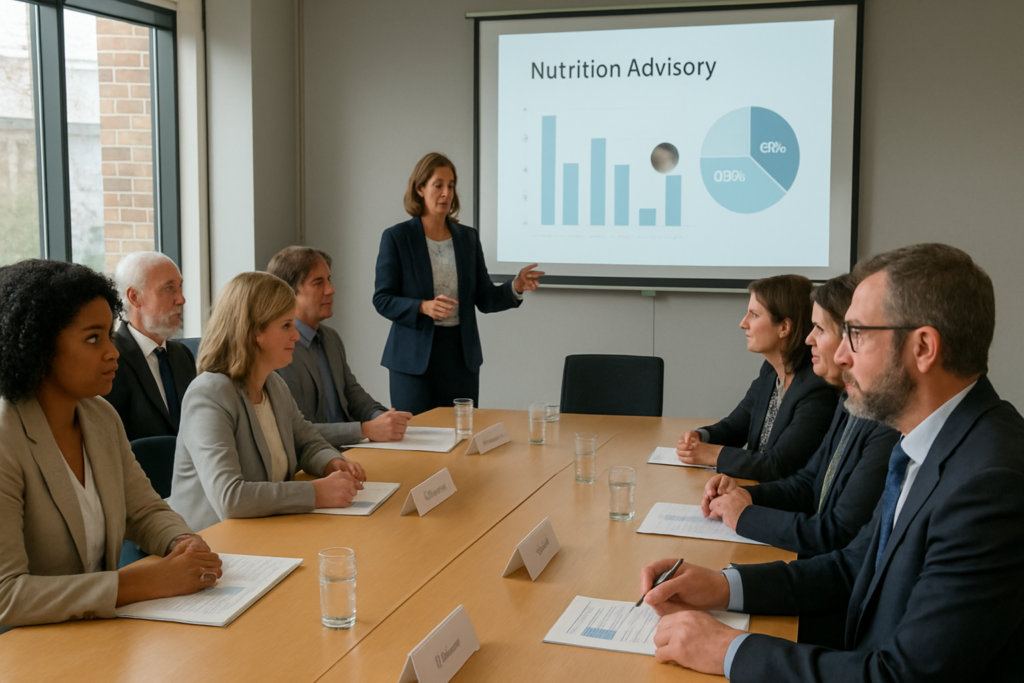
A new investigation by The BMJ says nearly a third of the UK government’s nutrition advisers still have “significant” ties to the food industry, including links to Coca-Cola, Sainsbury’s and Danone. The report says the latest findings come one year after a similar BMJ investigation in September 2024 found that more than half of the Scientific Advisory Committee on Nutrition’s members had such ties at the time.
The BMJ article, published on September 10, 2026, places renewed attention on how nutrition advice is shaped in the UK and whether industry connections could affect public trust. It also follows a broader set of recent BMJ nutrition stories, including coverage of food and nutrition policy and related public health concerns.
Why the findings matter for public health guidance
Nutrition advice informs policy on school food, labelling, population diet and chronic disease prevention. When advisers have financial or professional links to food companies, questions can arise about independence, transparency and perceived conflicts of interest. The BMJ’s report says the issue remains unresolved despite the passage of another year since its earlier investigation.
The story is especially relevant in the UK, where the government’s nutrition guidance can influence daily eating habits, public procurement and wider food policy. The BMJ report does not state that the advisers acted improperly, but it does say the ties remain “significant,” which keeps the debate over governance and accountability firmly alive.
What the BMJ investigation says
According to the report, nearly a third of the government’s nutrition advisers still have significant ties to the food industry. The named companies include Coca-Cola, Sainsbury’s and yoghurt maker Danone. The BMJ says this update comes after its September 2024 investigation found that more than half of the committee’s advisers had industry ties at that time.
The BMJ framed the findings as a continuation of a previous concern rather than a one-off discovery, suggesting that the composition of the advisory landscape has not changed enough to settle the issue. For readers following UK diet policy, the report adds another layer to the continuing scrutiny of who helps shape official nutrition advice.
Broader context around nutrition news
Recent nutrition coverage has also focused on unhealthy food marketing, food insecurity and diet-related disease, showing that policy debates are moving beyond individual food choices and into the structures that shape them. BMJ Nutrition, Prevention & Health recently highlighted research on unhealthy food marketing through prominent placement in Swedish online supermarkets, while Nature’s latest nutrition coverage noted strong interest in ultra-processed foods at the ESPEN 2026 congress.
For the UK, the latest BMJ findings are likely to keep pressure on policymakers to explain how nutrition advisers are selected, what conflicts are allowed, and how public confidence can be protected. The report does not provide a final policy answer, but it does sharpen an issue that remains central to how nutrition guidance is made and how credible it appears to the public.
Photo source: AI-generated or edited image