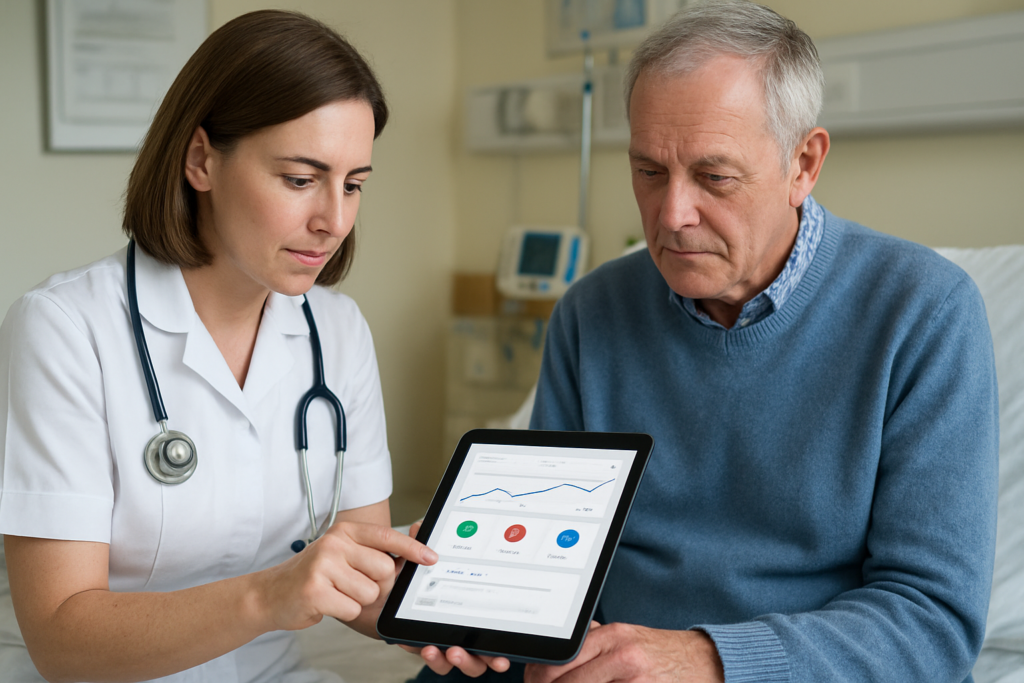
A free smartphone app that combines AI-driven health coaching, blood pressure monitoring, and behavioural incentives helped patients achieve meaningful reductions in blood pressure when it was built into routine hospital workflows, according to a report published last week. The findings suggest that digital tools may be most effective when they extend care beyond the clinic rather than sit apart from everyday treatment plans.
Digital coaching built into care pathways
The report, published on September 16, 2026, describes how the app was incorporated into an existing clinical workflow at Rush University Medical Center. Rather than functioning as a standalone consumer product, the platform was used alongside usual care, with the aim of helping patients stay engaged between appointments.
According to the summary, the app included AI-driven health coaching, blood pressure tracking and behavioural incentives. The hospital-linked approach is presented as a key factor in the observed improvements, reinforcing a growing theme in digital health: tools appear more likely to succeed when they are integrated into care delivery and not treated as an add-on.
Why the study matters for digital health adoption
The report adds to wider evidence that patient trust, transparency and workflow integration remain central to digital health adoption. HIMSS has recently highlighted that patients’ awareness of AI in healthcare and their comfort with AI-enabled applications vary meaningfully, and that organisations may need tailored trust-building strategies rather than universal ones.
That context matters for health coaching technologies, which often depend on sustained engagement over time. Earlier research published by Nature in August 2026 found that adults in a diabetes prevention trial initiated an AI-led programme sooner than a human-coach model, but also reported higher acceptability for the human-led option. Together, the studies suggest that digital coaching can improve access and engagement, yet patient preference and experience still shape real-world uptake.
A sign of where digital coaching is heading
The latest blood pressure findings point to a practical model for digital health: use technology to support, rather than replace, routine clinical care. For health systems under pressure to improve chronic disease management, that combination of remote monitoring, automated coaching and clinical oversight may offer a way to extend support between visits while keeping care connected to existing services.
While the report focuses on a single app and hospital setting, its broader message is clear. Digital coaching tools are increasingly being judged not only on whether they work, but on whether they can fit into the realities of healthcare delivery and earn the confidence of the patients who use them.
Photo source: AI-generated or edited image